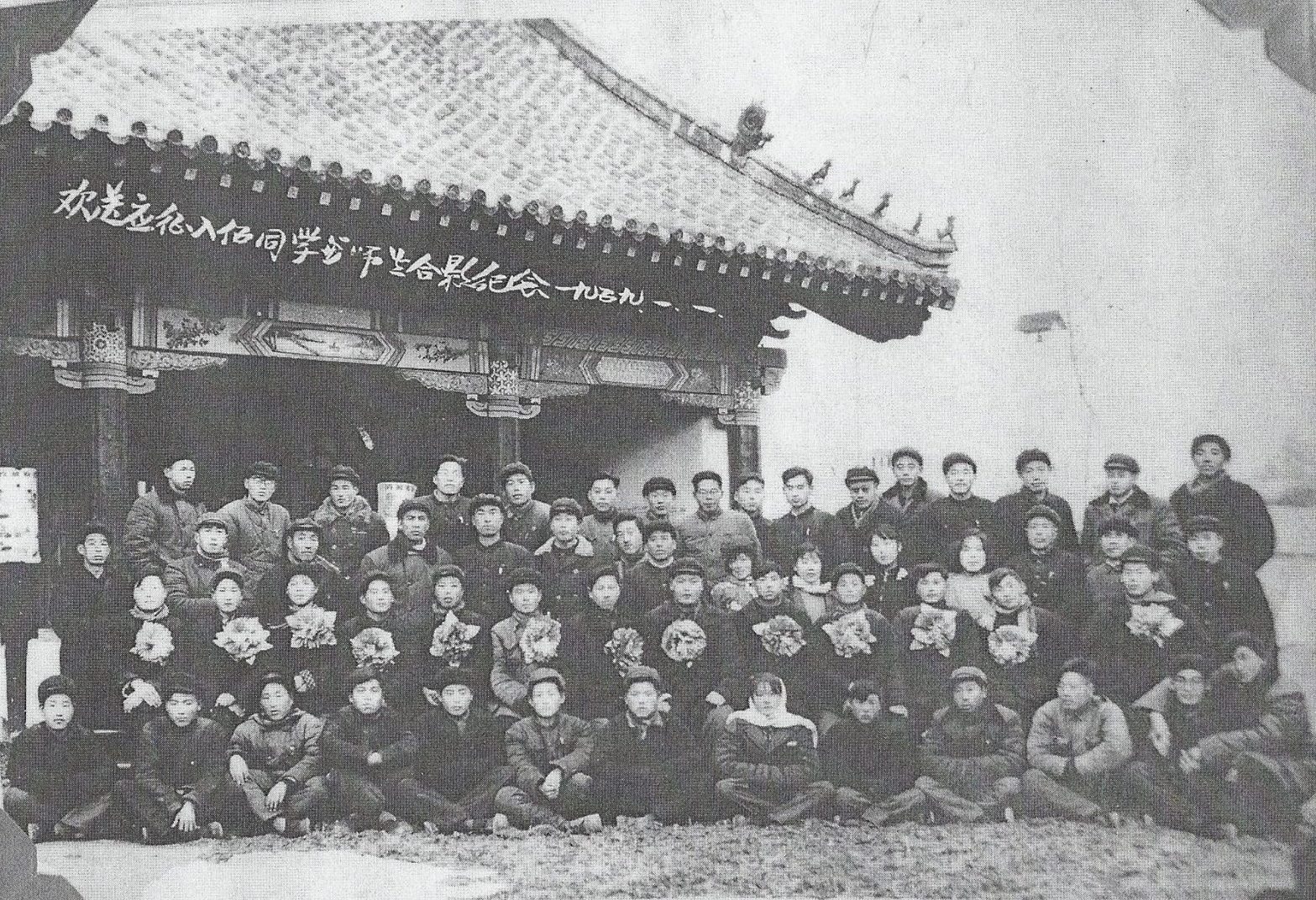
The picture above was taken in 1898 at the school founded by the descendants of Confucius and the four families dedicated to preserving the teachings of Confucius for more than two thousand years. Pictured here are families of those descendants. In 1912 one hundred years before I began teaching there, the school was opened to the public at the founding of the Chinese Republic at the end of the last dynasty.
What I have learned over more than thirty years of writing almost daily in what seems to be almost autobiographical is that the words come very easy to me. It’s almost like being one with nature and my environment. I often go out in the morning to my yard and garden with a to do list, but they intervene and tell me what I need to do first. My writing is like this too. It can often seem like filling in the next word on a blank page is coming from somewhere else. I can fill in the punctuation, but the content is coming from someplace else. Almost like AI before there was artificial intelligence, with the intelligence part coming from beyond me.
There was always an interrelatedness of all things and all living beings and the chain reactions of cause and effect, that with a compassionate heart along with a sense of proportion allows us to see things in their proper prospective. My own takeaway over the years was that when we are freed from our limitations as Confucius taught, we can reach out for a greater life that encompasses all things found in nature.
Writing about Confucius, Taoism, and Buddhism has been a spiritual journey spanning over thirty years, shared with companions both tangible and, as some might say, imagined. In China, I would often follow the rituals of making friends, learning what I had in common with those I met, and try to conform with the situation. Living in Qufu I was especially aware of the omnipresence of Confucius and the antiquity of a city with more than 2500 years of history.
I would often live, teach, and work through the examples of the sages of ancient history. My apartment was in the Old Town across the street from the school that was adjacent to the Confucius Temple and Mansion literally walking in the footsteps of Confucius every day. When I taught at the school established by the descendants of Confucius and the four families who preserved his history over the years, I often shared stories in English about Confucius’s history. It was a subject they were already familiar with, having learned it at home in the countryside or in villages and towns across Shandong Province. It was the students learning their own history as well.
Qufu was renowned for the exploits of the Yellow Emperor and Ji Dan, both recognized as the earliest residents of the city, with Ji Dan living more than five hundred years before Confucius. I approached teaching as if carrying on the work of the ancient sages, embodying their lessons not through dominance but by example. It would evolve into a learning experience for both the student and the teacher.
**** I have written a manuscript entitled “Qufu and Confucius” that goes into detail about my living and teaching in Qufu under the Books tab here on my website.
My travels with Lieh Tzu / Interpolations along the Way
Chapter Four – Confucius
61. Trusting One’s Senses
Remember what you have written about seeing, hearing smelling, tasting and touching.  The five senses that keep you alert as if to let you know that you are truly alive. If the eye is about to grow dim when it can discern the tip of a hair, does one really need the eye to see? If the ear is about to go deaf when it can hear the wings of a gnat, does one really need the ear to hear?
If one’s taste is diminished to the point of not telling the difference between waters of diverse sources, can one care about the source from which he drinks?  If one’s smell is clogged to much to distinguish between cooked and rotted food, would one wish to continue eating? If the body is about to stiffen when it delights in running, can one begin to understand the power of touching?
If the mind is about to go astray when it can recognize right from wrong, does one need the ability to think? What can truly define one’s limits and once they are found, how does one know to go further, stay put, or go back to from where you have come?  The answer is that the true path is one of moderation in all things. If a thing does not reach its limit it cannot revert to where it came from.
If one can truly see without seeing, hear without hearing, taste without eating or drinking, smell without smelling, know the touch without having to touch, or the mind know right from wrong without thinking, then cannot one’s destination be too far away? If you have become as one with all things, then how can you go wrong trusting your senses? How much simpler can the answer be? 3/16/95
Number sixty-one of one hundred fifty-eight entries.
Leave a Reply