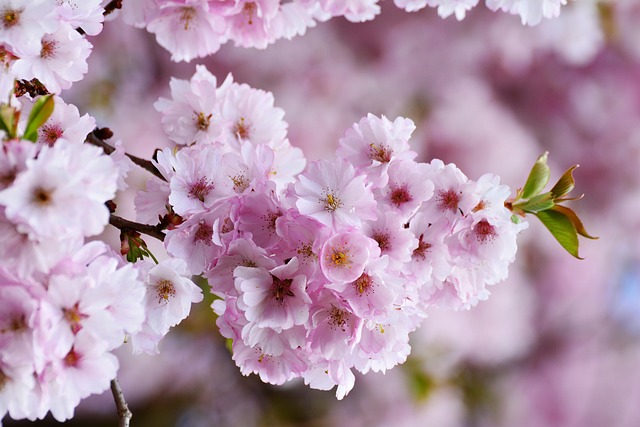
The picture above is of cherry blossoms. The story goes that seagoing manicures were the latest rage in the late 1920’s. Women were besieging the service departments of steamship companies for opportunities to polish up the nails of seagoers. “And why not?” asked the star manicurist of one of the big uptown hotels the other day. “The life of a manicurist on one of the big liners is just a bowl of cherries, my boy, just a bowl of cherries with whipped cream on the side.” And some may say that life on board the steamship was simply a dream, an illusion… or just a bowl of cherries.
The chapter “King Mu of Zhou” in “My Travels with Lieh Tzu” delves into Taoist perspectives on dreaming, pondering whether waking from the daily dream of life is desirable or even possible. If awakening is achievable, it raises the question of what we are waking into. Thinkers like Ram Dass suggest that we have a choice in this matter. Over time, some commentaries have even referred to this chapter as “Dreams.” There is little doubt that Lie Yukou (Lieh Tzu) was a real individual who lived in the Yellow River Valley of China around 400 B.C.E., following Lao Tzu and Confucius but preceding Chuang Tzu.
The original “Book of Lieh Tzu”. was written during a period called the Warring States Period of China. At this time there was a great deal of discussion among various schools of thought as to how one should live their lives. The philosophy of Taoism was just beginning to take shape, evolving into a guiding principle on how we should live and face death. What is the core essence that defines us? Are we here to transform into something greater, and are our dreams a means to guide us on that journey?
Throughout life, we explore the hidden patterns that shape the world, using them to transform and understand how everything follows its nature. By identifying these patterns aligning with our own natural instincts, we can start to grasp how to guide our lives effectively. Hence, the importance of dreams. When our thoughts and actions align with what can be called our “appropriate endeavors”, our tasks in the present naturally connect to our responsibilities toward others and the world around us. Our actions then become a seamless extension of what is always suitable and appropriate. This captures the essence of what Taoism once was and what it has now become.
We start by questioning whether the love of life is merely an illusion. How do we know we are here as “spiritual beings having a human experience,” meant to find our way back home, with dreams and memories serving as guides along the path? Taoist philosophy offers a perspective on accepting death, suggesting that while we cannot truly know what it is like to be dead, when the time comes, we might actually prefer it to life.
This entry serves as the beginning of the next chapter, introducing and expanding on these thoughts and ideas—what some might call illusions or even delusions about what life brings to our doorstep. It could be seen as having a vivid imagination or perhaps opening ourselves to perceive beyond what we think we know and to explore what lies beyond our understanding.
My travels with Lieh Tzu / Interpolations along the Way
Chapter 3 – King Mu of Zhou
36. Introduction… Transforming Reflections
Refreshing one’s memory, the world becomes more real than the nothingness from where we come and will return. However, can life be but a dream or are we dreaming, therefore we have come alive?

Traveling through time from one lifetime to the next, can our dreams be more than illusions we cling to along the way. When we awoke this morning from a blissful sleep, did we have any sense that what we have dreamed is less than the reality we lived yesterday or the day before or will come to know today, tomorrow or the next?
When dreaming are we aware that we are dreaming? When awake are we truly aware that we are awake? Or are we simply living our dreams? If both are the same, then the question becomes what can we be awakening into?
Dreaming that we are but a butterfly darting from flower to flower are we not as Chuang Tzu in his dream, or are we but the butterfly dreaming that he is Chuang Tzu? Are not our dreams living out the reality of who we are? Is not life but a dream which lasts until death, when we find our ultimate unveiling?
Is not awakening midstream in one’s life the opportunity to come closer to one’s true reality beyond the Tao? Is not all that breathes and becomes lifelike or has appearance therefore taking shape simply illusion? Where can reality and dreaming differ? Is not the ultimate truth only the reflection found in mirror images of ourselves?
If our experiences while we are awake are the same as when we sleep, then are not experiences found while we sleep the same as when we are awake? Is it not true living to abolish any division between illusion and reality? Thereby becoming indifferent to the world around us. All things being equal, do we not become transformed and continue onward to vistas we have known and seen before? 2/5/95
Number thirty-six of one hundred fifty-eight entries.
Leave a Reply