Taoism and Lao Tzu

Many commentators and contributors over time have said that Lao Tzu and the Tao Te Ching focus on inner cultivation rather than chasing worldly ambitions. It’s about how we view our surroundings, connect with others, and understand our own place.
It’s knowing who we are as spirit and following the path where everything thrives in its own grace, without seeking credit when our own efforts succeed.
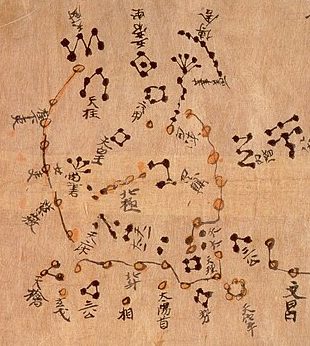
Te-Ch’ing, who was one of the greatest Buddhist writers if the Ming dynasty. His commentaries on Lao Tzu and Chuang Tzu revealed exceptional insight who says, “Our ‘place’ is like the position of the North Star. It refers to our nature.” The term north star refers to Polaris, Earth’s present northern polestar, or North Star, at the end of the “handle” of the so-called Little Dipper in the constellation Ursa Minor. The North Star was the primary speaking point in the night sky of the earliest shaman and storyteller used to get people’s attention.

In many cultures, the North Star has been linked to life’s purpose, the heart’s true desires, and steadfast ideals to guide us as it offers direction in life. By looking within, we’re meant to uncover and grow the gifts we already possess, helping us reach our full potential. Our true nature has always been intertwined with the Tao looking to spirit and the stars for direction. And yes, it is as Carl Sagan told us… “We are all star stuff”.
With Chapter/Verse 33 of the Tao Te Ching, the focus is on understanding the difference between using strength to conquer others and using it to conquer ourselves shows what it truly means to be strong.
That knowing when you have enough is to be rich. Going forward with strength is to have ambition. To not losing your place is to last long, and to die but not be forgotten – that’s true long life. Those who know contenoment pay the world no heed. Mencius said “The ten thousand things are all within us. How could we not be wealthy.”
The aim is to give words fresh meaning as they’re written in a different era, while keeping the context and theme true to the story. It’s what historians and storytellers do—bringing new understanding shaped by outside or new knowledge to what I like to call “our institutional memories”. When we act or respond to events with wisdom, our awareness often comes from physical sensations or how we react to sensory stimuli, guiding us toward the path we’re meant to follow.

Guided by our memories and gaining a new perspective adds deeper meaning to our intentions and invites us to consider how this applies today.
To what we referred to earlier, that the shen is not only the locus and source of all higher and “mystical” forms of consciousness but also the ultimate organizing force behind the more mundane everyday perception and knowledge of the external world.

At the time, and in history, it meant developing a practice of breathing meditation focused on the mystical realization of the Way, or Tao, and learning how to integrate it into our daily lives.
Ultimately, it’s about context—tapping into the psychic energy of the universe, where that energy merges with your own vibrations to guide you to where you’re meant to be next. Your memories blend this perception with knowledge, helping you understand others and stay grounded in the greater scheme of things.
Before we go on with Verse number 33 of 81, it’s worth noting that the title of the book we’re adding commentary to—Lao Tzu’s Tao Te Ching—is my own version, titled “Thoughts on Becoming a Sage: The Guidebook to Leading a Virtuous Life.” It’s important to note that Lao Tzu wrote the Tao Te Ching in the sixth century BC, while I wrote mine in May and June of 2000 and published it in China in 2006.
Verse 33 – Living Beyond Attachments
Proceeding unconsciously, as if you are only following the whims of the Tao and playing the role that you are here to play.

Knowing your place is secure and your destiny to one day return to live with dragons is assured.
What then can occur in the here and now but to live fully enmeshed in the Tao and to be sure you complete the role you are here to play. As if to live beyond attachments while continuing to pursue your final destiny.

The sage becomes wise by knowing himself and remaining perceptive of others by only being concerned about conquering himself and not others.
By striving to succeed at his endeavors and knowing contentment as his definition of being wealthy. Not losing his place thereby living forever.
-
超越情感
在不知不觉中前行,好像跟随着道的奇想,履行你来这里的职责。明白你的所在地已经安全无 碍,你与群龙的一日神游已经安排就绪。

此时此地,你完全沉浸在道之中,确信你能够完成你的使命,追求你的最后命运,就像要超越你的情感。
圣人聪明之处是他通过征服自己而不是征服别人,从而了解自己,了解别人。
努力实现他的理想,满足于自己所定义的富裕水平。不要丢失自己的地位,从而活到永恒。
Leave a Reply