When we observe the wildlife in our yard or animals expressing themselves with boundless vitality, we come to understand that they possess innate emotions tied to self-preservation and care of their offspring. I have found that we are to neither appear antagonistic nor overly compliant, allowing the animals to perceive us as one with them. If we show no fear, why should they fear us?
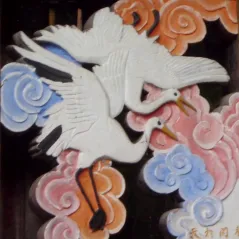
The white swan has been the symbol of transformation for many cultures throughout history. For myself and my studies of the white swan it is the symbolism of its association with transformation. It is said to represent the possibility of change and renewal, with the bird’s metamorphosis from an awkward and ungainly cygnet into a graceful and elegant swan seen as a metaphor for personal growth.
What I thought at the time was a great metaphor, was when we adopted both our daughters from China first in 1997 with Katie, then again in 1999 and Emily. All families adopting Chinese children had to come through Guangzhou and obtain the visa for their newly adopted daughters. We had to stay at the White Swan Hotel to obtain the visa. Sitting in the lobby watching families pass by with their new daughter was priceless. So much enthusiasm after what was sometimes a two-year process.
This association with the white swan is reflected in many works of art and literature, where the swan is often used to symbolize the process of change or the idea of spiritual rebirth. As a symbol of transformation, the swan represents the idea that change is possible, and that growth and renewal are always within reach. Another aspect of the swan’s symbolism is its association with self-expression. In some cultures, the swan is seen as a symbol of creativity and is often used to represent the idea of artistic expression or free self-expression. This association may be related to the bird’s graceful movements, which are often interpreted as a form of dance or performance. Similarly, the swan’s vocalizations, which range from soft cooing to loud honking calls, are thought to represent the idea of using one’s voice to express oneself.
I appreciate the concept of using our voice and actions as a means of self-expression. From an Eastern philosophical perspective, this aligns with the idea that humans are merely one among the ten thousand entities found within nature. Similarly, Ralph Waldo Emerson, from a Western viewpoint, emphasizes the transcendental ideal, suggesting that our journey begins recognizing the interconnectedness of the universe with all things found within nature.
That there is an inner connectedness that we are here to reflect through who we are and what we are here to do. This is where the concept that we are “to think globally and act locally” originates. This is not a new thought. We get out of nature’s abundance what we in-turn contribute and add to its growth and development. It’s what we experience when we walk through the woods in silence or sit in the sand along the beach listening to the rhymical coming ashore of wave after wave. A point arises that we are not simply listening, we become the wave or the silence we feel listening to the wind as it travels through the trees above us. It is what we find at the deepest spiritual knowing we experience in meditation and prayer.
My travels with Lieh Tzu / Interpolations along the Way
Chapter Two – The Yellow Emperor
28. Animal Instincts
Having come to know the animals and birds attracted to your garden and yard, you are asked how you control wild beasts and make them find comfort in your presence. 
You are asked to train another in the art of knowing your secrets. Reluctantly you relay that it is the nature of things with wild blood in its veins to have their own way and become angry when thwarted.
The man who feeds tigers does not dare give them a live animal as it can find only rage in another’s destruction. Approaching the tiger only when it is full penetrating angry feelings. Although different from man they allow the one who rears them because he allows them to have their own way. Killing him only when they cannot. Therefore, to thwart the animal would make them angry. Pleasing them would upset the balance of things and this is not done either. When joy runs its course only anger prevails, just as when anger is through, we revert to joy.
As I neither give them their way nor thwart them I am regarded as one with them in their world. How could either I or they know fear? That being so, it is only natural that when they roam my yard, they do not recall their wild ways. Just as when they find the comfort of my garden, they no longer desire or long for the wilds of the valleys and mountains from whence they came as they have found their home.
The Tao teaches that since we all are the same only taking form in different shapes, how could I be any different from them. 1/22/95
Number twenty-eight of one hundred fifty-eight entries.
Leave a Reply