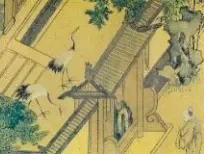
Taoism and Lao Tzu
Every day’s entry is like a collaboration of ideas and new editing to add clarity to what needs to be said today. We’re still in the beginning of setting the stage for the book with new commentary that adds continuity to the teachings and writings of Lao Tzu. It’s the process of meditation really with clearing away all that doesn’t apply to the task at hand welcoming those who are anxious to contribute to the effort today.
What matters most is being present as the storyteller and staying true to what needs to be expressed today. Whether it’s adding a daily entry or contributing new commentary to an existing piece, the challenge lies in keeping the flow of universal thought alive within the subject while remaining faithful to the story.
Following the acknowledgements and references, I’d like to include more on the significance of Lao Tzu and the Tao Te Ching before moving into my own biography as it appeared in the book that was published in 2006. Gaining a deeper understanding of Lao Tzu’s role in history is important. For more than 2,500 years, the Tao Te Ching has set the standard for people to interpret the way of virtue in their own way. It became so significant that emperors often stepped in to settle disputes over word choices, eventually leading to the creation of a standard edition.  Still, the standard edition remains open to revision, and every student of the Tao Te Ching goes through the process of picking from different interpretations to make sense of the text.
The ability to adapt and evolve in response to an ever-changing environment is key to helping these commentaries thrive. To fully understand the history of Lao Tzu, you must first understand the role of the shaman and the I Ching as the initial starting point in Chinese pre-history.
Thanks to centuries of line-by-line and verse-by-verse interpretations, we can see how the Tao Te Ching became the foundation for what would later be known as Taoism in affect having the final say, or footnote, that became essential to Chinese history and philosophy. However, if you begin your study with Lao Tzu, you miss the context of the times in which he lived. And importantly, you come away with the thought asking, “Knowing this how should we live today?”
Overall, I appreciate Martin Palmer’s insights about Lao Tzu in his book “The Elements of Taoism”. He explores themes such as knowledge, time, language and meaning, the Way, and the interplay between the material and non-material. How there is an inability of language to express or even come close to reality.
It’s like making plans based on the ever-changing weather. The Tao is the foundation, the source of everything—a knowing that it’s the unformed origin of all that exists and all that is yet to come. By remaining unformed, it stays undefinable.
The brief biography below for the book is one I did in 2006 twenty years ago. I had adopted both of my daughters from China and been to Qufu a half dozen times. It would be another half dozen years before I was the begin teaching in Qufu. I could update it to the present, but it’s important to get a picture or snapshot of my travels in China up to this point. When I begin my commentary below, I can expand how Lao Tzu grew in influence over the centuries.
III. Dan’s/Kongdan’s Biography
As a student of Chinese history and culture, the author has studied many world philosophies add religions for over 35 years. Now known in China by his Chinese name, Kongdan, he makes his home in both the United States in Boynton Beach, Florida and Qufu in Shandong province here in China.
Mr. Dan DeCarlo grew up in two small towns in the state of Missouri in the middle of America. Lamar, where he lived until he was 12 and Joplin, where he graduated from high school and went to college for two years before serving to prepare him for a sense of his place in the universe at a seeming very young age. Dan gained an understanding of people, their history and culture, all before graduating from high school at the age of 18 through listening to countries broadcasts on shortwave radio.
It was a subscription to China Pictorial that he began receiving in 1969 while in the 10th grade in high school that he that would forever begin pointing him in the direction of his passion and love for China. Later as a political science major at Missouri Southern State College in Joplin and at Southwest Missouri State University in nearby Springfield he began studying Chinese history and culture more intensely later graduating from the university with a Bachelor of Science degree in 1976.
His sense of commitment to his community and politics led soon afterward to his running for a state representative in Missouri state government and his serving in the Missouri House of Representatives in 1979 and 1980.
Afterward he began a city planning career first in Springfield with the Westside Community Betterment Association as a community organizer before moving to Massachusetts in 1988 to accept a position in city planning in Fall River. Then later moving to Florida he became a city planner in Boynton Beach where he currently resides with his wife Marie and daughters Emily and Katie. Over the years Mr. DeCarlo known to his friends in China as Kongdan, has written extensively about Chinese history, religion and culture. First, publishing a book in 2004 entitled An American journey through the I Ching and Beyond and the current book about Lao Tzu and the Tao Te Ching.  He has become a sought-out lecturer in high school and university campuses in China and continues to plan to publish his work in China and hopefully at some point in the USA.
Dan’s activities in addition to being an author including being the President of his own foundation known as the Kongdan Foundation whose purpose is to build bridges of understanding through education showing that perceived differences between people are much smaller than our similarities. A major role in the foundation is to publish the Unity Daily Word. It is because of his understanding of Chinese history, religious traditions and culture that he is well suited to the task as an emissary building greater understanding between people and his hopes that he can bring out the best of others so that they too can find and follow their own endeavor and destiny.
Leave a Reply