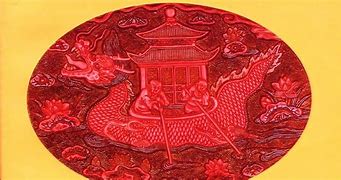
Below is an entry from my website entitled “My travels with Lieh Tzu.”
It is from my own version of “The Book of Lieh Tzu” that  has been required study for centuries at Taoist monasteries and temples in China written thousands of years ago. Telling us over time that you do not have to quote great men or women to show that you are one as well.
With a purpose to show and tell that certain principles are  eternal. That through the ages people have agreed on certain principles and we are to accept who we are in good faith and full virtue. To embrace our role and go there with all we encounter in nature.
Taoist precepts were expected to study and emulate three areas of life: blameless character, righteous conduct, and truthful conversation. The almost one-hundred sixty entries  described above, were required studies for someone who was to become a Taoist monk or follow the teachings in Lao Tzu’s Tao Te Ching, the Way of Virtue.
The ultimate for our spirit has always been to follow the tradition of rising to travel on or with the wind once again. To that which points us to states of meditation and awareness that  must be experienced, not just studied intellectually.
Not simply to be read, as much to update and become.
Opening ourselves to the effect of the “mystical” is not to  mystify, but to return us to a better relationship with the cosmos.
As well as with the wisdom encompassing the heritage of all native traditions that connect us to and with nature and the ten thousand things.
As understanding the path, or way of nature and others, show and teaches us to better find our own.
When you begin your daily practice by getting comfortable in  your chair or mat and imagining that you have risen above your seat and can travel on the wind to destinations unknown.
Leaving your current or existing problems or situation behind. For myself, it is like conversing and joining old friends once again.
The little guy on the left was known to travel the silk road as  a guide at the time of Marco Polo almost a thousand years ago. Short in stature, but long on wordless communication and stories that took you to where you needed to go.
I have always thought that this entry from ”My travels with Lieh Tzu,” was a great preface to a sitting meditation tradition.
My travels with Lieh Tzu
Number 58 Oh, How Perfect is Travel!
Why should one leave one’s doorstep to travel except to see and experience how things change? While others may travel to see different sights in various places, I am only interested in seeing  how nothing ever can stay the same and discover others who know the difference.
Wang Xizhi (303–361) was a Chinese calligrapher, traditionally referred to as the Sage of Calligraphy. Born in Linyi, Shandong Province, he spent most of his life in the present-day Shaoxing, Zhejiang. Wang Xizhi learned the art of calligraphy from Wei Shuo, commonly addressed as Lady  Wei. He excelled in every script but particularly in the semi-cursive script.
He became famous through his writing style of calligraphy that expresses ideas and places to where we would go or follow if or when given a chance.
As a tour guide through our imagination, self-expression  through our writing became the norm as his style of calligraphy spread through the arts and China.
As though riding on a cloud writing could be the vehicle that takes us there through or by our own hand.
Calligraphy becoming more of an art form connecting us to the unknown that we define for ourselves, than simply letters  or words and a form of communication.
Taking people to places they might not otherwise go. To someplace ethereal beyond where or what we think we know.
Often serving as an aid or guide in meditation like notes on a scale of music just waiting to be played.
Legend has it that Wang Xizhi, described above, learned the  key of how to turn his wrist while writing calligraphy by observing how the geese move their necks in his yard. I have been to his restored home in Linyi in 2013 and had several students in my classes in Qufu from his hometown.
The entry from “My travels with Lieh Tzu” continues…
Lieh Tzu’s mentor Hu Tzu asks him:
“Is not your travel really the same as other men’s? Would you insist that there can be a difference? Anything at all that we see,  we always see changing.
You are amused that other things never remain the same, but do not know that you yourself never remain the same.
You busy yourself with outward travel and do not know how to busy yourself with inward contemplation. By outward travel,  we seek what we lack in things outside us. While by inward contemplation we find sufficiency within ourselves. The latter is perfect, while the former an imperfect kind of traveling.”
From this point on Lieh Tzu stayed home thinking that he did not understand travel.
Until Hu Tzu tells him:
“How perfect is travel!
In perfect travel we do not know where we are going, in perfect contemplation, we do not know what we are looking at. To travel over all things without exception, contemplate all things without exception, this is what I call travel and contemplation.”
To leave one’s seat while still sitting. To travel upwards as you look down on your room, your house, the town in which you  live. As if you were a thousand feet in the air and asking yourself:
Where do I go today! North, east, south, or west. What does it matter?
All directions are free to you as if riding the prevailing winds to nowhere special. As everything everywhere is laid out before you.
Oh! How perfect is travel!
How else could one ever say that he has seen all that there is to see, in the past having been there, in the present leaving to destinations unknown, and in the future going only where your destiny will find you?
Oh, how perfect is travel! 3/15/1995
Said another way – what living traditions do we find freedom  in for ourselves?
As we travel around the world meeting new people, eating new food, enjoying the sights and sounds of places we have not seen or been before, what is it we learn to most appreciate.
Except that in knowing that our lives are about connections and expanding our reach within the context of contemplation  of the road ahead.
As we look to a universal level of interpretation, even mystical expression, and traditions that point to states of meditation and awareness that must be experienced. To what I would call empowering living traditions and our own truth… and fearlessly going there.
Even here in the USA, across the street from where we live or elsewhere, cultural influences flourish where people have migrated because of opportunities and endeavors they wish to follow. Untethered by or to the status quo except for that which gives us freedom of expression and spirit within what defines a true community respecting all of us.
With this in mind we ask – where shall we go today?
Leave a Reply