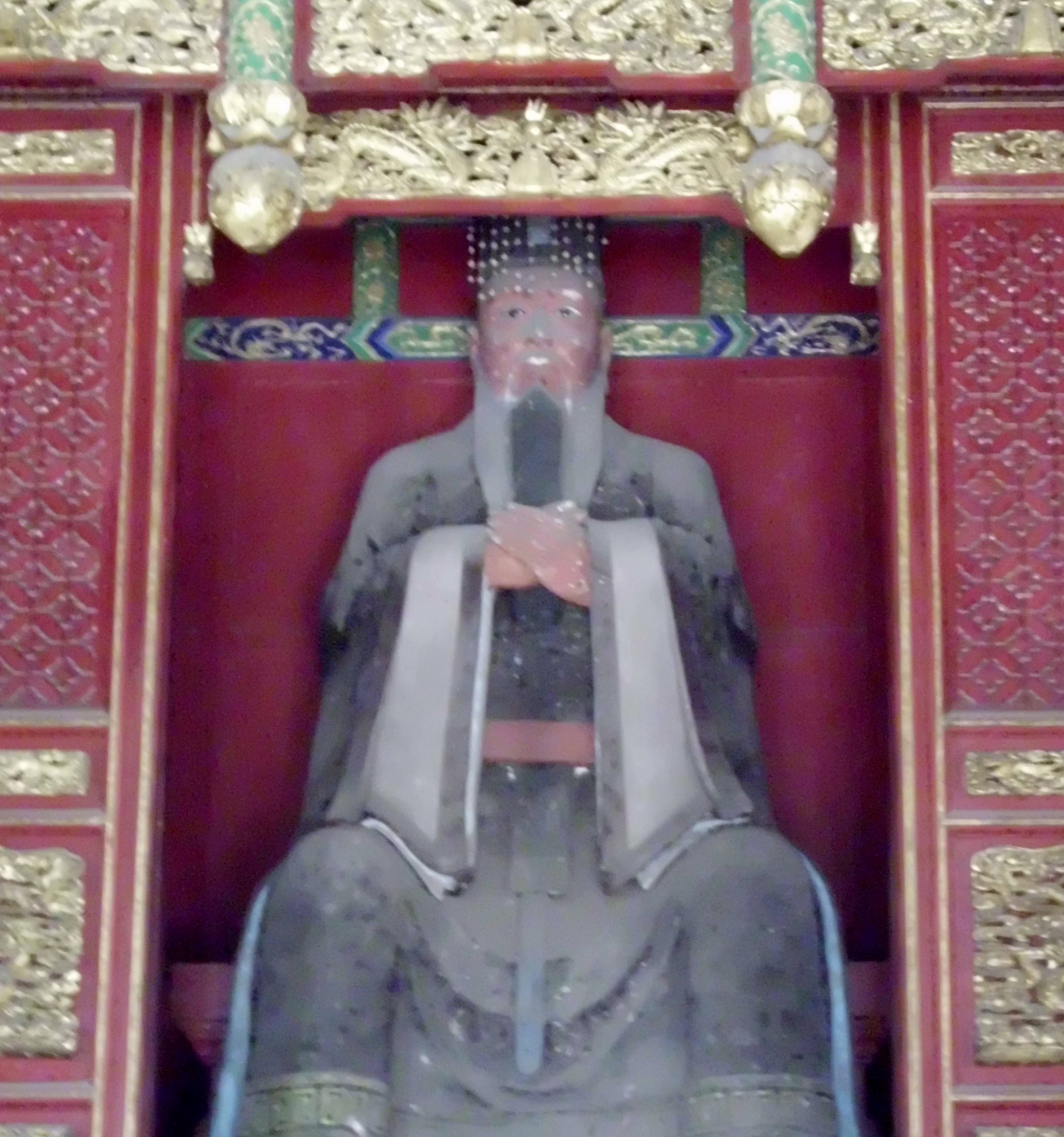
Ji Dan depicted above is regarded as the first sage of ancient China who lived around 1000 BC, approximately 500 years before Confucius. He witnessed the transition from the Shang dynasty to the Zhou dynasty and hailed from Qufu. Ji Dan is credited with compiling what became the Book of Rites, which defined the rights of individuals in relation to the king or emperor. This work can be likened to the Magna Carta in England.
It took five hundred years before Confucius shared his teachings, which would later be recognized as benevolence and virtue. It was more than two hundred years after his time that Confucius’s words and writings were acknowledged and followed. However, it all started with Ji Dan, shown above, the first true sage of China.
I have always seen good storytelling as telling and conveying the opposites of what may occur through our actions. Either good, bad, and when we remain indifferent. I often saw this in my work both as a city planner trying to implement the city’s comprehensive plan and later doing neighborhood master plans in Boynton Beach. Again, this was repeated in China in Qufu during the ten years I was there before teaching at the university. People often wanted to do the right thing but didn’t know how to put their thoughts and words into action. It was always like there was an invisible barrier between what people thought they could do and what they should do when and if they had the tools they needed for their success.
It’s like igniting a spark within us and questioning what truly defines human nature that shapes our behavior. We’re often told there are two sides to every story, but I believe every story is multi-faceted, filled with as many nuances as there are people, each offering their own perspective on events and circumstances. A homeowner with a significant financial investment in their property views things differently from their neighbor who is simply renting. How we see our lives can be defined the same way. Why education, income, and choices can become the pivot to our beginning to see beyond the present. Given an opportunity why couldn’t the renter be a responsible homeowner as well?
 To what Lao Tzu and Confucius taught us that we are to see beyond fear of not being or having enough and that lack and limitation are not attributes meant to define us, but unfortunately often can be.
Ralph Waldo Emerson inspired us to value ourselves while striving to transcend, to discover the best within us, and to acknowledge and respect the transcendental qualities in others. He emphasized the inherent nature of all things, urging us to embrace universality and appreciate others’ efforts to do the same. He believed that everything is meant to evolve and adapt to its environment, ultimately achieving its highest and most ideal form.
This chapter, titled Yang Chu, aims to delve deeply into questioning the enemy of human respectability—something often mistaken for morality and moral conventions—as we explore what it truly means to be good neighbors. A tall order for sure. Why the underpinning of the teachings of Confucius regarding benevolence and virtue came to be so prevalent along with Taoist and Buddhist philosophies in Asian history.
My travels with Lieh Tzu / Interpolations along the Way
Chapter Seven – Yang Chu
110. My brother’s reckoning
Who can be right in the way they live and die? Who can decide the ways of heaven and hell? Since both heaven and hell are simply the bed we choose to lie in each night, are we not just determining the content of our dreams?  Rather we sleep peacefully and soundly or toss and turn with nightmares and demons accompanying our thoughts. With all things being equal, who can know what we are to awaken to?
Three brothers Chan, Chao and Mu were the talk of the province. Chan was the Chief Minister who within three years of his taking control of the government the good had submitted to his reform and the wicked dreaded his prohibitions. The state was in good order, and the other states were afraid of it. Chao and Mu were different. They followed another course. Chan’s older brother Chao was fond of wine, while his younger brother Mu was fond of women.
Chao’s fondness for wine outweighed everything he did. He had collected over one thousand jars of wine in his cellar and a whole hillside of yeast for brewing. One could not come close to his house without the smell or dregs of the wine overcoming them. When Chao was overcome with wine he did not care if the world was at war or peace, he cared not about mistakes he made for which he could have repent, he took no concern over his possessions, the love of his family or that it is better to live and die.
Chan’s brother Mu, on the other hand, was a lover of women. The courtyard of his home was lined with dozens of rooms where he kept the youngest and most beautiful girls of the region. He kept to the pleasures of his harem where he may stay for months at a time. Mu would shut his door to his kinsmen and stop meeting and going out with his friends. Any young virgin brought to his attention was not safe from his grasp.
Chan was concerned about his brothers’ well‑being and discussed his predicament with his friend Teng Hsi. Teng Hsi confided he had been aware of the problem for some time and that he felt a man should influence his family by putting his own house in order. The example you set for those nearest to you is the one always seen from furthest away. Chan responded by saying that while his administration had set the state in order, his family was in anarchy.
He wondered how he could do any good for the state and do nothing for his brothers, Chao and Mu. Teng Hsi then told Chan:
“You should help them to set their houses in order, to help them see the importance of keeping their health. As their brother, you should appeal to their respect for propriety and duty.”
The next day Chan met with his brothers, Chen and Mu and admonished them for their behavior. He stated that it was knowledge and foresight that set men apart from beasts and birds, knowledge and foresight that led to propriety and duty. That they should learn to live dutifully, and as such, reputation and office could be theirs for the asking.
Chao and Mu responded:
“They had known that that option was theirs for a long time but had long since made their choice. They did not need him to tell them to see it.  Life is too precious, and death comes too soon. We wish to enjoy life to its fullest, pushing our best years to the limit. Our only misfortune is a stomach too weak to drink the best wine without restraint and potency which fails us before our lust is satisfied. We have no time to worry about reputation and health as we are having too much fun!”
Chao and Mu continued:
“We have long wondered why it is you who have not seen the errors of your ways. How can you wish to disturb our hearts with hopes of glory and salary? Although you have seemed to find success in leading others, how can you say that you have done so? In the end you will only be overworked.
Is it not better to find what gives scope to your nature without telling others what to do? You may find your method of ruling others fine for the short haul, but governing men is out of accord with their hearts. The anarchy that you abhor is the anarchy we will embrace to the end.  We only find humor now that while we have longed to make you come over to see our way of thinking, you have instead come to us to attempt to sway us to yours.”
Chao went back to Teng Hsi and relayed to him his meeting with Chen and Mu and conveyed what they had told him. Teng Hsi could only shake his head in wonder and say:
“Your brothers are the wise ones, and we are the fools. The good government of Cheng is mere chance; how can we take credit for it.”
Who can be right in the way they live and die? Who can decide the ways of heaven and hell?
Since both heaven and hell are simply the bed we choose to lie in each night, are we not just determining the content of our dreams? Rather we sleep peacefully and soundly or toss and turn with nightmares and demons accompanying our thoughts. With all things remaining equal, who can know what we are to awaken to and if we do, what are we to do in the meantime? 7/6/95
Number one hundred ten of one hundred fifty-eight entries.
Leave a Reply