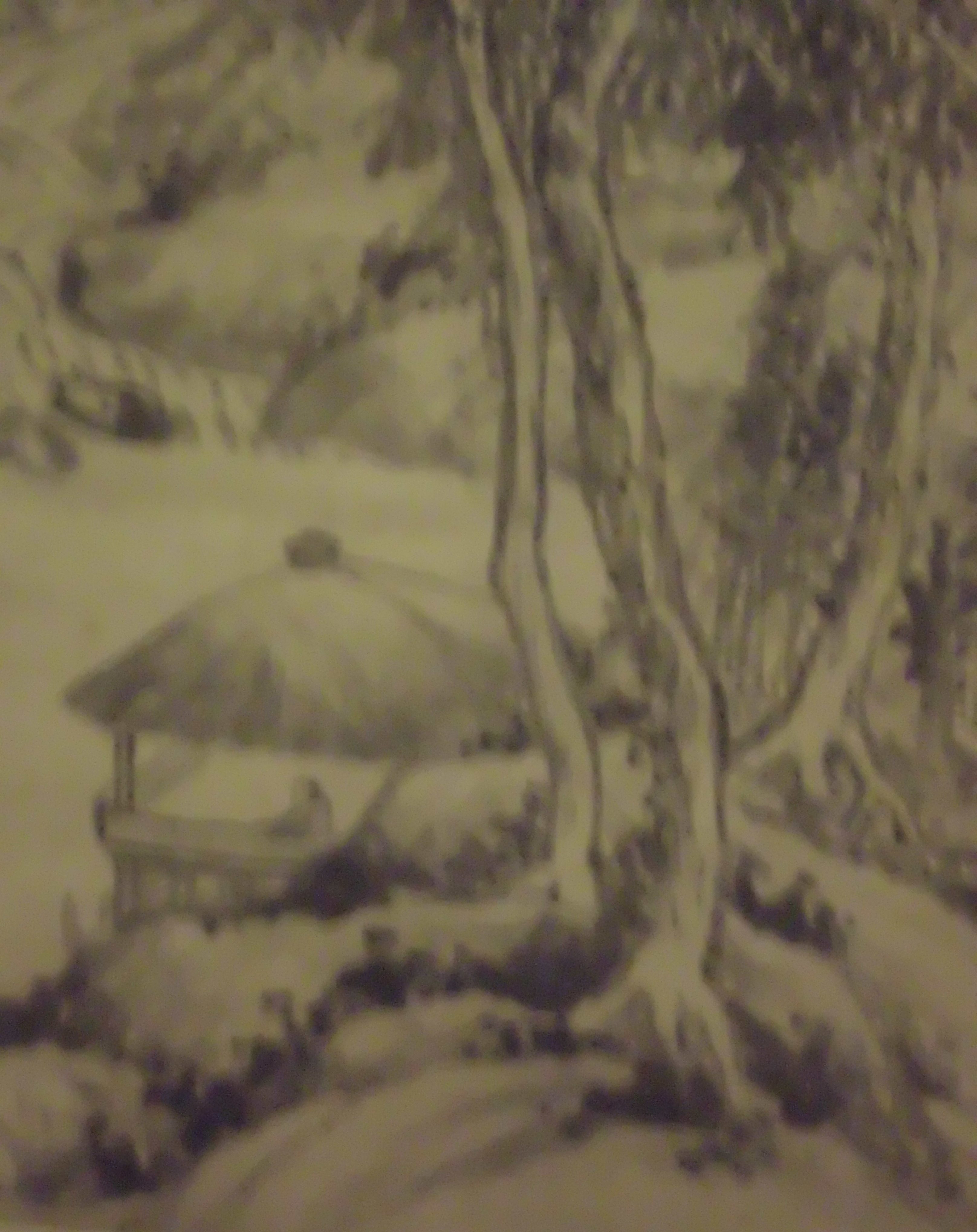
In my previous post, I explored the story of Kuan-yin and how he followed in the footsteps of Lao Tzu with Lieh Tzu journeying to places few had ever been or seen before through his writing. The story follows Lieh Tzu on his travels, where he encounters Kuan-yin, the legendary figure Lao Tzu had met years before at the renowned pass. It was there that Lao Tzu left behind the tale of the Tao Te Ching as he journeyed west toward history and immortality.
Recounting the story in the first person makes me feel like I’m truly part of the experience. It felt like the next step along the Way, or Tao, affirming that my energies were aligned and I was on the right path. It’s like the words just flow as I write, leaving me wondering, “Where did that come from?” To write as though I was the original.
In this chapter of “The Book of Lieh Tzu”, it is mentioned that many writers sought to express similar sentiments and needed a platform to showcase their work. I embraced this experience, and the response naturally unfolded as the next step.
Over time… centuries that followed the writing of Lieh Tzu became the practical application of what was to become Taoism for the “everyday man”. It became essential in learning our path and seeing simply beyond the present.
The entry below “The Corner Table” relaying how others want to get their own chance to express how Lao Tzu and the Tao Te Ching had changed the landscape going forward. I love this story because it shows how prevailing thought converges on our interaction with what might be seen as the essence of universal thought, to what could be described as divinity and order.
Leading to a discussion centering on the sage and his concern for knowledge, truth and falsehood, sincerity and where it all should lead. All agreeing on the principle that the sage knows what will go in by seeing what came out, knows what is coming by observing what has passed. This is the principle which he knows in advance.
In my practical role as the Assistant Planner in Boynton Beach back in 1995, I was focused on updating the city’s comprehensive plan. At that time, when I wrote the entry below, I was in a state of flow with my writing, particularly concerning the work I was focused on.
I was no longer just incorporating what I had read into my writing; I had moved beyond interpretation to sharing my own recognition of my journey and its connection to the story. I was no longer simply writing or imitating someone else but truly acknowledging and becoming part of the story.
I think for those who over time had read The Book of Lieh Tzu it impacted them so completely that they were compelled to add their own story that took the next step for themselves.
Why The Book of Lieh Tzu became like an instrument of self-awareness that took it to the level of the Lao Tzu’s Tao Te Ching and the writings of Chuang Tzu. To the point that the story below really needs no introduction. It is a totally original composition by me.
“The Corner Table” is meant to be read and reread multiple times to see how over thousands of years the blending of thought of what would be called Taoism as a guide to who people were meant to become. If you want to better understand the historical path of Lao Tzu’s Tao Te Ching, this story begins to reveal its deeper meaning.
My travels with Lieh Tzu / Interpolations along the Way
Chapter Eight – Explaining Conjunctions
108. The Corner Table
Wanting to continue the dialog with Kuan-yin, others come forward with the need to get involved in the discussion. To get in their own two cents worth. Many have come this way over the centuries and left with Kuan-yin bits and pieces of their knowledge and wisdom.
The inn at the mountain pass the gateway to places where many have departed never to be seen as the person they were before. Many travel this way. Not only the Taoists, but many who speak of the current thoughts of the hour. One’s entry only the desire to question authority and anything accepted by the standards or rules of the day.
Attention drawn to the table in the corner where many are speaking. Each taking his turn to add to the commentary at hand. Taoists, Confucians, Buddhists, Mohist, all. Each not questioning the legitimacy of the other, only adding to the discussion that which reaches the highest accord. Differences put aside for a while. Central themes are the only point of discussion. As the plum wine flows and spirits reach higher and higher.
The discussion centered on the sage and his concern for knowledge, truth and falsehood, sincerity and where it all should lead. All agreeing on the principle that the sage knows what will go in by seeing what came out, knows what is coming by observing what has passed. This is the principle which he knows in advance.
Concurring that when this knowledge is passed on to the world that those who cannot see beyond themselves cannot come forward to know the Way. That we judge by our own experience, verify by the experience of others. The Mohists present adding that if a man loves me, I am sure to love him; if he hates me, I am sure to hate him.
They all agreed that Teng and Wu became Emperors because they loved the Empire. While Chieh and Chou were ruined because they hated the Empire. With everyone nodding around the table shaking his head with this knowledge their own verification.
Kuan-yin then adding that Lao Tzu had told him that when judgment and verification are both plain, refusing to act on them is like refusing to go by the door when you leave or follow the path when you walk. If you do this, will it not be difficult to get the benefit you seek?
Nods of agreement going around the table, all present in awe still that Kuan-yin had had such a privilege to have been the one to have taken down the words of Lao‑tzu and could even now recite them so well. In the good-natured banter that followed, they all knew the above to be true as the red-faced Kuan-yin tries to step back out of the limelight. As knowing glances around the table convey a togetherness, they just for this moment all share and cherish.
Several then chiming in together that they had observed this in the virtue of Shen Nung and Yu‑yen, verified it in the books of Shun and the Hsia, Shang, and Chou dynasties. That they had reached their own conclusions by the exemplary scholars and worthy men they had each met.
That they had never found a case where survival or ruin, rise and decline did not derive from this principle. With this, all those left could do was to thank the innkeeper for such great hospitality as each of those present paid their tally, went upstairs to sleep or outside to catch the wind and wonder. 7/30/95
Number one hundred twenty-five of one hundred fifty-eight entries.
Leave a Reply