April 1, 2018
Number 50
Cloud dancing with the Immortals, or perhaps just re-telling the world’s memories.
Cloud Dancing
From the clouds dragons appear to those who have prepared.
To the I Ching, heaven is to found residing with dwellings of dragons who roam the sky resting in the clouds.


Do not look for me where you have found me before. You will not see me where you have seen me before. Dancing in the clouds with the immortals is where I am to be found.
To be seen with dragons. Cavorting above it all. Beyond earthly endeavors. A strong personality who with compassion and caring succeeds by seeing his destiny in the clouds.


Finding the Tao, finding oneness and finding myself floating across the ski with chi. Cloud Dancing across the sky is easy living with dragons is not. A group of dragons are seen riding the clouds disappearing through the sky.


As we disappear, I look back and see dragons resting on clouds dwelling in the sky.
An original composition and interpretation of the Chinese Classic the I Ching (1 HEAVEN / Heaven over Heaven). 2/3/94 (to be found on the website at I Ching – Voices of the Dragon)
In music duo Simon and Garfunkel’s song, from their Bridge over Troubled Water album, The Boxer there is a line “Still, a man hears what he wants to hear and disregards the rest”. Like there is a confirmation bias believing what we see or 

I’ve been watching Ken Burns “The West”, on Netflix and for me it is very depressing to 


Almost twenty-five years ago, in February 1994, I wrote the above story about dancing in the clouds with dragons. The following year in 1995, I wrote below about finding Confucius. It would be two years before my first trip to China in 1997 to adopt our first Chinese daughter Katie in Guangdong Province and another two years after that before visiting Qufu, the birthplace of Confucius for the first time in October 1999, while on our way to Urumqi to adopt our second daughter Emily. A visit that would change who I thought I was and begin to be reminded of who I am yet to become.


This was followed by the publishing in China of my first book, An American Journey through the I Ching and Beyond in 2004, and my second book, both now here on my website and on Facebook, Thoughts on becoming a Sage, the Guidebook for leading a virtuous Life, two years later in 2006. Or the incorporation of The Kongdan Foundation that same year in January 2006. Who knew… that when I wrote this “Finding Confucius”, and the city of Qufu he hails from, that it would alter so dramatically my life’s work and endeavors.


Asking the question, what is it that defines us? It was as if the ancient dragons had come looking for me and found me back in December 1993 while I was in Fall River, Massachusetts and there I was. As I concluded unknowingly back in March 1995… Where can all this possibly lead? Who can say? They knew and came to remind me who I had been and was yet to become and that it was time for me to get on with it… my ultimate purpose.


My first night in Qufu on October 25, 1999, was spent in the Queli Hotel that is adjacent to the Confucius Mansion and Temple. For years, previous to our visit accommodations for visitors to Qufu were in the annex of the Confucius Mansion itself. Due to tourism and promotion, the Queli Hotel was built. After a night in which I could not sleep, I got up very early and went outside to take a walk. I had this premonition that I had been here before.


Not once but many times. It was as if Qufu had always been my home and the place I would always return to. Not only in the past, but in the future as well. As I walked that morning, a block away on Gulou Street (where the Hotel was situated), on the north side of the street was the Confucius Normal School where I would teach more than ten years later, and on the south side of the street was where my daughter Katie and I would live in the apartment we would have while I was teaching in Qufu at Jining University.
My experiences in Qufu can be found in an unpublished manuscript here on my website in the tab Qufu and Confucius. From 1999 through last year, I have made almost fifty trips to Qufu, and China and Shandong Province. Most for sister city trips, my publishing and teaching, and adopting my two daughters from China (Emily and Katie). Last year (2017) I was there for six weeks (May 12 – June 23) and traveled to fourteen cities in five different provinces. The focal point was still Qufu and reunions with my students.
In the Book of Lieh Tzu, there is a chapter entitled Confucius.


I wrote my own version of “The Book of Lieh Tzu” entitled, My Travels with Lieh Tzu in 1996. It is an unpublished manuscript that appears here on my website.
The Book of Lieh Tzu has served as a primer and guide for all precepts entering Taoist monasteries and for those wanting to follow the historical foundations of what was in the past that may today exist – as if acting in conjunction with the present, and knowing this, having an understanding of what may come next over time. (The basis of I Ching). My initial entry in that chapter is as follows:
Finding Confucius
Just who is this man known as Confucius and what of his obsession with knowledge? Can he possibly equal the things brought forth by Chuang Tzu who can see through all to its true origin?


While Confucius may help guide those responsible for maintaining the overall scheme of things in their dealings with others, can he possibly know the true underpinnings of all there is to know that lead to logical conclusions? Can thoughts and ideas expressed outside the true essence of the Tao have any real significance? Looking for differences to trap unseemly paradox and analogies that can confuse those not serious about finding and true way of virtue.
Who can be true to his own thoughts? Swaying this way and that by the Confucian suspicion of speculation without practical or moral relevance or by the comfort found in the seeming irrationality of the Tao. The three tenants of higher consciousness, Buddhism, Confucius and Taoism always present. Ultimately pushing everything to higher ground. Moving all to places they would otherwise miss. Just as the seasoned traveler who breaks the mountain’s ridge to see the vast panorama spread before him. Every direction simply leading to destinations previously seen and known but forgotten.


Everything crystallizing over time. Can one move forward knowing the paradox found in all things that are allowed to advance in their own way? Knowing that Confucius is forever weighing benefit and harm and distinguishing between right and wrong.
Can there be a moral relevance to all things considered practical as found in the analytical comfort of knowing the results lie in the search for truth and knowledge? Can one following such a course of action be taken seriously? Who can know? Is not the ultimate to be born a Taoist, to live as a Confucian and die a Buddhist? Where can all this possibly lead? Who can possibly say? 3/5/95
When I wrote the above it was as if I had been preparing and studying Eastern philosophy for a very long time, as if since high school even earlier… my whole life. As if I was preparing for a long voyage from which there would be happily no return. Almost as if I was reawakened to inspire others to wake up through my own teaching, wisdom and writing.


As if to make sacred and be here simply to tell the world’s, specifically China’s memories. The paradox and conundrum of every sage throughout the ages. To keep to himself the wisdom he has learned, the ancient memories, or share them with the world. Why many retreat to become reclusive and out of the way or view of others. To mountaintops where the only voices heard are of old friends, as if knowing and conversing with dragons once again.
From my initial writing in December 1993 forward, it was first internalizing the I Ching, then Lieh Tzu, then Lao Tzu, and the essence of Taoism with Chuang Tzu as my mentor.
Never really focusing on Confucius so much. (I was Dantzu long before I became Kongdan). It was as if I didn’t need to because I already possessed all I needed to know and simply preparing myself for a long journey. Long before the thought of ever going to Qufu ever occurred to me. As if setting the stage for what was to come next. That it was more important to chronicle the past, than to re-learn something I already knew.
As if needing only to be reminded or remember. Once finding my eternal rhythm, seeing things as they were so that they may be seen in their best light again. Capturing the essence of 

Socrates (470 – 399 BC) was a classical Greek (Athenian) philosopher credited as one of the founders of Western philosophy, and as being the first moral philosopher, of the western ethical tradition of thought. (Wikipedia)
In Eastern philosophical thought, Confucius is comparable to the Socrates of the western world, and his teachings emphasize morality as a path to understanding and enlightenment. In a famous lesson, he told a student that “reciprocity” is the one word that sums up his philosophy on life. According to Confucius,
“Wisdom, compassion and courage are the three universally recognized moral qualities of men.”
In addition to instructions on how to be a moral person, many of his quotes are revered today as personal motivation and encouragement. For example, Confucius said, “It does not matter how slowly you go, as long as you do not stop.” Beyond his pleas to treat others with morality and respect and his encouragement to pursue a passionate life, the
Confucianism philosophy can be summed up as, “Life is really simple, but we insist on making it complicated.”
As I continue to go through my own version of Lao Tzu’s Tao Te Ching that I wrote in 

A partial preview can be seen on the Lao Tzu and Taoism tab here on my website. Ultimately, it is what the sage has learned and then in turn taught others along the way that guides us. The commentaries below are meant to be read as a discussion between Lao Tzu and those interested who have thought deeply about the text itself. The quotes below and references to their authors are from Red Pine’s, Lao Tzu’s Taoteching.
Thoughts on becoming a Sage
Verse 38 – Learning to see beyond Oneself
Instilling virtue within oneself requires neither thought nor effort or action if you are truly in sync with the way of virtue.
The Tao but a natural extension of who you have been, are now, and yet to become. Virtue simply the embodiment of an essence that embraces the way.


Your role is to remain empty with your every action an effortless dialog leading others along the Way. As you look inward to insure you are ready to proceed with kindness and compassion to all you meet. Yet the kindness of the sage cannot go beyond fulfilling his own nature. Since his every action remains effortless he does not think about it.
Seeing beyond what his senses tell him, he simply does what is the natural extension of himself.


His endeavors focusing on embodying the highest images of who he is yet to become and seeing beyond himself. Seeing beyond himself, he embodies the way and comes full face with his destiny.
Seeing his future, his vision matches things and names with reality. He remains humble and reveres harmony. Seeming beyond himself he becomes the connecting between all that should be between heaven and earth. As the sage he embodies the way. ##
Han Fei says, “Virtue is the Tao at work”.
W ang Pi says,
“Those who possess Higher Virtue use nothing but the Tao. They possess virtue, but they don’t give it a name”.
Yen Tsun says,
“The person that embodies the Way is empty and effortless, yet he leads all creatures to the Way. The person who embodies virtue is faultless and responsive and ready to do anything. The person that embodies kindness shows love for all creatures without restriction. The person who embodies justice deals with things by matching name with reality. The person who embodies ritual is humble and reveres harmony. These five are footprints of the Tao. They are not the ultimate goal. The ultimate goal is not one, much less five.”


Wang P’ang says,
“Kindness is another name for virtue. It differs, though, from virtue because it involves effort. The kindness of the sage, however, does not go beyond fulfilling his nature. He isn’t interested in effort; hence he doesn’t think about it.”
Wu Ch’eng says,
“The Tao is like a fruit. Hanging from a tree, it contains the power of life but its womb is hidden. Once it falls, it puts forth virtue as its root, kindness as its stem, justice as its branches, ritual as its leaves, and knowledge as its flowers. All od these come from the Tao. ‘That’ refers to flowers. ‘This’ refers to fruit. Those who embody the Tao choose the fruit over the flowers.”
Verse 39 – Moving from finding the Way to living in Virtue
The sage takes no action but leaves nothing undone or behind as the Tao remains forever nameless.


Left alone to themselves, the ten thousand things find their own way and become transformed on their own.
Once awakened, the sage moves them with nameless simplicity. Remaining true to themselves they become quiet and tranquil. As if a single oneness, or purpose, has found each one with everything finding its place.
Finding himself alone to his liking, the sage becomes as one with heaven and earth as everyone finds him on the path to virtue.
Knowing he has now found the way, the sage clings only to his virtue ultimately showing the way for everything he has left behind. ##
Wang Pi says,
“One is the beginning of numbers and the end of things. All things become complete when they become one. But once they become complete, they leave oneness behind and focus on being complete. And focusing on being complete, they lose their mother. Hence, they crack, crumble, collapse, dry up, and fall. As long as, they can preserve their form. But their mother has no form.”


Ho-Shang Kung says,
“It’s because Heaven becomes one that it graces the sky with constellations and light. It’s because Earth becomes one that it remains still and immovable. It’s because spirits become one that they change shape without becoming visible. It’s because streams become one that they never stop filling up. It’s because kings become one that they pacify the world. But Heaven must move between yin and yang, between night and day. It can’t only be clear and bright. Earth must include both high and low, hard and soft, the five-fold stages of breath. It can’t only be still. Spirits must have periods of quiescence. They can’t only be active. Streams must also be empty and dry. They can’t only be full. Kings must humble themselves and never stop seeking worthies to assist them. They can’t only lord it over others. If they do, they fall from power and lose their thrones.”
Su Ch’e says,
“Oneness dwells in the noble, but it is not noble. Oneness dwells in the humble, but it is not humble. Oneness is not like the lustre of jade: so noble it cannot be humble, or the coarseness of rocks: so humble it cannot be noble.”
Number 51
April 12, 2018
What is the ultimate price, or cost of Freedom… and can it matter?
Chao Chih-Chien says,
“To go back the other way means to return to the root. Those who cultivate the Tao ignore the twigs and seek the root. This is the movement of the Tao – to return to where the mind is still and empty and actions soft and weak. The Tao, however, does not actually come and go. It never leaves; hence it cannot return. Only what has form returns. ‘Something’ refers to breath. Before things have form, they have breath. Hence, they all come from something. ‘Nothing’ refers to the Tao. Breath comes from the Tao. Hence, it comes from nothing. This is the movement of the Tao.”
Ultimately, the question becomes… how can we let our inner consciousness pass us by, 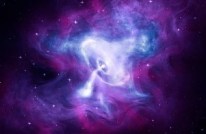
As Carl Sagan, the famous astrologer in his famous series on the cosmos once said, “we are all made of star stuff”. While letting go of nothing that matters, everything simply returns to its beginning, to its source. Matter simply the substance of which any physical object consists or is composed. When do we know the freedom to find our “hearts” or soul’s desire? And most importantly do we know it when we see it and are we listening. Does freedom lie inside us or outside in the material world and in the end – can it matter, or perhaps are we here just passing time?
Observers in several countries reported the appearance of a “new star” in 1054 A.D. in the direction of the constellation Taurus. Much has been learned about the Crab in the centuries since then. Today, astronomers know that the Crab Nebula is powered by a quickly spinning, highly magnetized neutron star called a pulsar, which was formed when a massive star ran out of its nuclear fuel and collapsed. (Photo by NASA)
In The Snow Leopard, Peter Matthiess writes… In the Book of Job, the Lord demands,
“Where was thou when I laid the foundations of the earth? Declare if thou hath understanding! Who laid the cornerstone thereof, when the morning stars sang together, and all the sons of God shouted for joy?”


My answer would be that we all were there, I know I was… All matter that existed in the universe then at the time still exists today, even as it and we take shape in the present.
Even Carl Sagan, mentioned above adds, “Man is the matter of the cosmos, contemplating itself.” Just as when we ask “How are we to treat others?” We respond “there are no others”. (Ramana Maharshi)
I would add that there seems to be a common thread, like an eternal live nerve that connects us. We keep coming back as if we have unfinished business to find or complete the connection. As if the universe is not done with us just yet and we know it. That we are to live life in the moment free of attachments, finding as Confucius said… the simplicity in everyday life.
It is true as the Buddhist says, that when we are ready the teacher appears. It’s the getting ready and watching for him/her that’s the hard part, and when the door opens, we must be ready to walk through. To what some may call the resurrection of our spirit. It is something best expressed in Lao Tzu’s Tao Te Ching in Verse 41 called Contending for the Middle as expressed in my own interpretation below.
I am sure that there are things I say here that you want to just say, oh, it’s just Dan, or 


To never let pre-supposed conditions, or limitations, define who we are yet to become. It is as if we have acknowledged knowing that our origins come from the stars. As if, we acknowledge that our soul, our source, is one with all that has been and will ever be. That everything, including you and I are one. As if we are Dancing with Chi (chi is our eternal energy that never dies) as we continually are transformed by our own spiritual DNA.
It is gaining freedom in the skin we are given that often confounds us that keeps us in a state of bewilderment. I recently attended a celebration of the life of Dr. Martin Luther King. Jr., at the Springfield Art Gallery on April 4th, the day he was killed fifty years ago in 1968. It was an excellent program. What struck me most was a talk given by an older gentleman focusing on the price, or cost of freedom.
He spoke of pre-determined barriers imposed by others that kept him from what he felt was his highest endeavor only because of the color of his skin. Living a life without freedom that seems forever out of reach for people of color in America. What stands out at the moment is MLK’s s quote, “I look to a day when people will not be judged by the color of their skin, but the content of their character”. As an historian, my take initially is where or what is it in human nature that leads us to define our individual values as not accepting others who may not look, act, or necessarily agree with us? Can freedom from bigotry exist when we see others as less than ourselves?
Ho-Shang Kung says,
“The ten thousand things all come from Heaven and Earth. Heaven and Earth have position and form. Hence, we say things come from something. The light and spirit of Heaven and Earth, the flight of insects, the movement of worms, these all come from the Tao. The Tao has no form. Hence, we say things come from nothing. This means the root comes before the flower, weakness comes before strength, humility comes before conceit.”
Why do we see the advancement of the “content of another’s character” so 

Fighting against inequality is an age-old endeavor and knows no color. My own ancestors were there at the signing of the Magna Carta in England. No kidding. It was, however, the right of the first-born son to property that led younger sons to migrate, to travel to the new world. To Jamestown, Plymouth Rock and beyond. It seems as though 

One of the four surviving copies of the 1215 Magna Carta containing the famous clause ‘to no one will we sell, to no one deny or delay right or justice’.
Magna Carta, meaning ‘The Great Charter’, is one of the most famous documents in the world. Originally issued by King John of England (1199-1216) as a practical solution to the political crisis he faced in 1215, Magna Carta established for the first time the principle that everybody, including the king, was subject to the law. Although nearly a third of the text was deleted or substantially rewritten within ten years, and almost all the clauses have been repealed in modern times, Magna Carta remains a cornerstone of the British constitution.
Most of the 63 clauses granted by King John dealt with specific grievances relating to his rule. However, buried within them were a number of fundamental values that both challenged the autocracy of the king and proved highly adaptable in future centuries. Most famously, the 39th clause gave all ‘free men’ the right to justice and a fair trial. Some of the Magna Carta’s core principles are echoed in the United States Bill of Rights (1791) and in many other constitutional documents around the world, as well as in the Universal Declaration of Human Rights (1948) and the European Convention on Human Rights (1950). (Wikipedia)
Another of my ancestors, the First King of Scotland, rallied behind William Wallace who came back to life in the movie Braveheart. Wallace fought and died for an independent Scotland with his own immortal words of… FREEDOM. What is it that freedom means and why does it have to be singular and not universal? How can our own wants and needs be greater than another’s, why can’t we all be free? And what can it matter in the end.


The Yellow Emperor, also known as Huangdi, was a shaman, who in 2698 B.C. invented the Chinese lunar calendar, which follows the cycles of the moon. The Chinese lunar calendar begins with the reign of the Yellow Emperor.
Traditionally, he was considered to be from Qufu, more than 2,000 years before Confucius and that the I Ching began with him. The zodiac was based on Chinese astrology and was used as a way to count years, months, days, and hours in the calendar. Chinese astrology was elaborated during the Zhou dynasty (1046–256 BC) and flourished during the Han dynasty (2nd century BC to 2nd century AD).


During the Han period, the familiar elements of traditional Chinese culture—the Yin-Yang philosophy, the theory of the 5 elements, the concepts of Heaven and Earth, and Confucian morality—were brought together to formalize the philosophical principles of Chinese medicine and divination, astrology and alchemy. The earliest intent of what would become astrology was to develop the concept of freedom. If you could know cause and effect, you could predict the outcome. That if everything was tied to the sun, moon and stars some sense of predictability could be established. Over the centuries this became not just a theory, but how to structure society and a person’s individual life. That if you know what comes next you can imagine the outcome and are free to respond accordingly. We then create our world by and through our actions.
According to Chinese astrology, a person’s destiny can be determined by the position of the major planets at the person’s birth along with the positions of the sun, moon, comets, 

Dancing with Chi


Everything that ever was, everything now and that ever will be is within you now to find. All that there ever was to know or that there will be to know is within you to find.
You have been everywhere there has been to see, have seen all that there is to see and, in the future will see all that there ever will be to see.
You are not a know-it-all. But you know all that there is to know. Simply come to know yourself and remember what you have forgotten. Simply to find again, again and again. 2/6/94
As I continue to go through my own version of Lao Tzu’s Tao Te Ching that I wrote in 

Lao Tzu’s Tao Te Ching was the culmination of thousands of years of philosophical thought of what was to become Taoism thanks in part to copies found in tombs of those who were buried with copies of it in China. There are eighty-one verses in the Tao Te Ching. Verses 40 and 41 appear below. Verses 1 through 39 were seen here on my most recent posts. The balance will be seen here over the coming months.
A partial preview can be seen on the Lao Tzu and Taoism tab here on my website. Ultimately, it is what the sage has learned and then in turn taught others along the way that guides us. The commentaries below are meant to be read as a discussion between Lao Tzu and those interested who have thought deeply about the text itself. The quotes below and references to their authors are from Red Pine’s, Lao Tzu’s Taoteching
Thoughts on becoming a Sage
Verse 40 – The Guardian Angel
If an angel came down from heaven to relay that what you thought were your weaknesses were actually your strengths and your strengths your weaknesses, would you have the courage to reach out and change the way you live each day.


If an angel came down from heaven to relay that your only limitations were self-imposed and you could accomplish whatever you wanted as long as the beneficiary was not yourself, what would you do first?
If an angel came down from heaven and stood right here – and said that people only know the work of working and that the greatest work of all is the work of not working. Caught up thinking that everything comes from something. If they knew that something comes from nothing, they would not work so hard and enslave themselves to things. They would instead turn to God and the Tao and concentrate on cultivating spirit.


Finally, it is when knowing that everything has its limit. That when their something gets way out here…. It has no choice but to come back the other way. Ultimately when we do become balanced, we become centered. When we become centered, we can see beyond ourselves, and we can discover why we are here. God’s grace and his hand come forth to guide our way.
Those who cultivate the Tao act with humility and harmony. Those who cultivate virtue look to themselves for the truth, not to the words of others. For those who understand that what moves them is also the source of their life, they can begin to understand the gift of Heaven and live forever. ##
Confucius says, “To hear of the Tao in the morning is to die content at nightfall. (Lunyu: 4.8)
Wang An-Shih says,
“The reason the Tao works through weakness is because it is empty. We see it in Heaven blowing through the great void. We see it in Earth sinking into the deepest depths.”
Te-Ching says,
“People only know the work of working. They don’t know that the work of not working is the greatest work of all. They only know that everything comes from something. They don’t know that something comes from nothing. If they knew that something came from nothing, they would no longer enslave themselves to things. They would turn, instead, to the Tao and concentrate on their spirit.”
Verse 41 – Contending for the Middle
How is it that some can hear of the correct way and follow it with devotion, while others when hearing of it are content to argue whether it is real or not? And still others cannot seem to keep from laughing at such folly.


However, if the latter did not laugh it wouldn’t be the way.
For contentment to find its middle both extremes must be shown. The brightest path to some seems dark, the quickest path seems slow. The smoothest path remains rough. The highest virtue low. The whitest white seems pitch black. The greatest virtue wanting while the staunchest virtue timid. The truest truth remains uncertain. The perfect square will seem to lack corners as the perfect tool remains idle and does nothing. The perfect sound is hushed and quiet, as the perfect form remains shapeless.
It is through these opposites that the two sides of everything become clear. Once clear, the Tao remains hidden from view, except to those who can truly see. Remaining hidden from view himself, the sage can easily find beginnings and endings and know when to start and how to finish as he already knows having seen both sides many times before. ##


Li His-Chai says,
“When a great person hears of the Tao, even if people laugh at him, they can’t keep him from practicing it. When an average person hears of the Tao, even if he doesn’t disbelieve it, he can’t free himself of doubts. When a small person hears of the Tao, even the ancient sages can’t keep him from laughing. Everyone in the world thinks existence is real. Who wouldn’t shake his head and laugh if he were told that existence wasn’t real and non-existence was?”
Li Jung says,
“The true Tao is not fast or slow, bright of dark. It has no form, no sound, no shape, and no name. But although it has no name, it can take any name.” Lu Hsi-Sheng says, “Name and reality are often at odds. The reality of the Tao remains hidden in no name.”
Yen Tsun says,
“The quail runs and flies all day but never far from an overgrown field. The swan flies a thousand miles but never far from a pond. The phoenix, meanwhile, soars into the empty fault and thinks it is too confining. Where dragons dwell, small fish swim past. Where great birds and beasts live, dogs and chickens avoid.”
Number 52
April 21, 2018
Just who was this guy named Confucius?
One day Confucius said, “I would rather not speak. Tzu-kung asked, “If you do not speak, what do we have to record?” Confucius replied, “Does Heaven speak? The seasons travel their course, and creatures all flourish. What does Heaven say?” (Lunyu:17.19).
I am often asked in China… why don’t I write books about Confucius as I have about the shaman, I Ching and Taoism (Lao, Chuang, and Lieh Tzu)? I think it is that in now knowing Confucius, there becomes a much bigger story to tell. Confucius had the uncanny ability to connect the dots of history and was the ultimate storyteller. It was here he left his legacy and became immortal through his virtue and traits of benevolence. He lived in the words he spoke leaving others to acknowledge his wisdom.


It is as if the work of the historian, or some would say the teacher or scholar, is never-ending. As if knowledge and wisdom cannot be foretold as a haphazard affair. What is to be remembered and what stories are to be told goes without saying. That 


As if all great writing ended with the Qin Dynasty in 214 BC after Emperor Qin Shi Huang burned all the books and buried the noted scholars of the age in Xian, most everything had to be re-constructed from memory. As if trying to wipe the slate clean to begin anew thinking nothing that occurred before could equal what was to come.


Emperor Qin was famous for the terracotta warriors who he felt would lead his way in immortality. Most feel he died of mercury poisoning in his quest. Even today, more than two thousand years later, his tomb nearby cannot be approached due to it being surrounded by mercury poisoning. What he thought would help him live forever is what killed him. All great writing was to be destroyed, except for that of Confucius.
Dujiangyan, was an irrigation project completed during the Warring States period of 


These translations to Chinese would be called transliterations, seventy-five volumes from Sanskrit to Chinese. Lao Tzu’s Tao Te Ching was translated then to Sanskrit and sent to India at this time. Eternal truths told as if someone or something must serve as if the spark that must come forward to re-tell the stories and memories of the past, so that we now don’t forget. China would never be the same. But, it would still be adapting with Confucius that led the way.
Until recently, there were only two mediums of communication. Only the oral history passed from generation to generation, versions of what may have been said and symbols of what was to become the written word. That which is generally conveying someone else’s explanation of what was said and/or meant. But it was the oral history of the tradition of the shaman and eventually what Confucius may h


The teachings and works of Confucius brought order and structure giving the Emperor “divine right” to guide what would come to be known as succeeding dynasties. Confucius always looked to the rites of the past in order to understand the way forward. This worked for almost two thousand years until the British came along wanting fine porcelain and tea to carry back to England. The Middle Kingdom was no longer the center of the universe as they had come to know.


Its strength became its biggest weakness because they could not readily adjust to the influences of the outside world. Just as the Mongols had overtaken the Great Wall five hundred years earlier, China was always prone to hold onto the past. To what some would say the “feudalism” created by Confucian ideology. However, once as adjustment was made, China always reverted to it true heritage. Every age converted Confucius to match their own objectives through the use of “commentaries” to relay what Confucius really meant… This is never truer than today. First and foremost, over time, history teaches us to become pragmatic. Learning from mistakes of the past to create a better future for ourselves and others. Remembering that there is nothing new under the sun as we acknowledge the inevitable change that must occur.
Confucius lived from 551 to 479 BC, but the history of Qufu goes back to include the Yellow Emperor (Huangdi) who lived from 2698–2598 BC and Ji Dan, the Duke of Zhou in the 11th Century BC. All three have temples, i.e., memorials in their honor here 

The Five Classics:
- The I Ching, also known as Classic of Changes or Book of Changes, is an ancient


- The Classic of Poetry, also Shijing or Shih-ching, translated variously as the Book of Songs, Book of Odes, or simply known as the Odes or Poetry is the oldest existing collection of Chinese poetry, comprising 305 works dating from the 11th to 7th centuries BC.
-

- The Book of History or Documents, (Shujing, earlier Shu-king) or Classic of

- The Spring and Autumn Annals, or Chunqiu is an ancient Chinese chronicle that


Historically, what Confucius is most noted for were the Analects, (which literally means “Edited Conversations”), also known as the Analects of Confucius. It is a collection of sayings and ideas attributed to the Chinese philosopher and his contemporaries, traditionally believed to have been compiled and written by Confucius followers.
It is believed to have been written during the Warring States period (475–221 BC), and it achieved its final form during the mid Han dynasty (206 BC–220 AD). By the early Han dynasty the Analects was considered merely a “commentary” on the Five Classics, but the status of the Analects grew to be one of the central texts of Confucianism by the end of that dynasty.
Confucius “teachings” promoted the idea of the innate noble nature of man, later conveyed 

Confucianism’s Mandate of Heaven was a key concept underpinning imperial legitimacy. Heaven chose a particular man and his descendants to be mediators between heaven and the people. The man was to be like a god. This became the justification for the emperor to assume the throne at the behest of heaven giving him authority over all. Heaven’s decision was to be known through the interpreting of natural omens, circumstances, and an almanac that followed the sun, moon, and stars that would foretell the future.


Today Qufu is considered a major tourist destination in China because of its five thousand years of history, primarily because of Confucius. It is the only city in the world with three World Heritage sites, the Confucius Temple, the Confucius Mansion, and Confucius cemetery where over 100,000 of his descendants are buried. Qufu is also known as the home of the Yellow Emperor and Ji Dan, the Duke of Zhou. The City of Lu (Qufu), was always the center of attention for dynasty after dynasty with Emperors using Confucius teachings to support the claim to the Mandate of Heaven described above. It is my own home in China where I have taught and have many friends. I had an office and apartment across the street from the Confucius cemetery for a few years. I would sit in my third-floor office and look over the wall and peer into history. Or as Confucius says in the beginning of this blog… “Does Heaven speak? The seasons travel their course, and creatures all flourish. What does Heaven say?”
There is a very famous picture here of the Red Guard during the Cultural Revolution 

As if history was repeating itself, reminiscent of Emperor Qin of the terra cotta warriors fame, who tried to re-define history in his own image going forward. It didn’t work in 200 BC or in twentieth century China with the Red Guard and cultural revolution either.
How many times must we see extremes leaning to the right or left before we learn that it is the middle ground that saves us? That seemingly every so-called political or religious effort that seems to know how to proceed only serves to get in the way when things outside of ourselves, not our inner virtue, are allowed to guide us going forward.
With the age-old axiom of cause and effect and doing unto others as we want done to us as the ultimate in nature’s sway. As we look to the shaman and sage who has seen and done it all before. With our task only to find the silence so that we too may stop and listen. Perhaps it is as nature has always told us, that extremes have endings and cannot last. And maybe just learning from the past and what becoming pragmatic can do for ourselves.
As I continue to go through my own version of Lao Tzu’s Tao Te Ching that I wrote in 

A partial preview can be seen on the Lao Tzu and Taoism tab here on my website. Ultimately, it is what the sage has learned and then in turn taught others along the way that guides us. The commentaries below are meant to be read as a discussion between Lao Tzu and those interested who have thought deeply about the text itself. The quotes below and references to their authors are from Red Pine’s, Lao Tzu’s Taoteching.
Thoughts on becoming a Sage
Verse 42 – Emulating the Tao as you give birth to all around you
The Tao gives birth to one. One gives birth to two. Two gives birth to three and three give birth to ten thousand things. When I as one embraces the Tao and open my heart and mind to the universe I become complete as my focus remains on the horizon.
When I show another person the way, we walk in unison guided by what we have been taught. When we two brighten the path of the third all things become possible and in unison we give birth to a thousand things. As we too become the world’s teachers.


With yin at our backs and yang in our embrace we look for harmony. What the world hates we love. Just by what some gain in losing others will lose by gaining keeping the world forever in balance. Remaining fully enmeshed in the Tao, the sage simply follows his mentor, Lao Tzu, the ultimate teacher of the way. As such, we are reminded to reduce our desires, remain humble and practice the virtue of harmony.
Letting these three be our guide we quietly give birth to all around us. ##
Ho-Shang Kung says,
“The Tao given birth to the beginning. One gives birth to yin and yang. Yin and yang gives birth to the breath between, the mixture of clear and turbid.


These three breaths divide themselves into Heaven, Earth, and Man and together give birth to the ten thousand things. These elemental breaths are what keep the ten thousand things relaxed and balanced. The organs in our chests, the marrow in our bones, the spaces inside plants allow these breaths passage and make long life possible.”
Lu Hui-Ch’ing says,
“Dark and unfathomable in yin. Bright and perceptible in yang. As soon as we are born, we all turn our backs on the dark and unfathomable yin and turn toward the bright and perceptible yang. Fortunately, we keep ourselves in harmony with the breath between.”
Te-Ch’ing says,
“The orphans, ’the widowed, ‘and ‘the destitute’ are titles of self-effacement. Rulers who are not self-effacing are not looked up to by the world. Thus, by losing, some people gain. Rulers who are only aware of themselves might possess the world, but the world rebels against them. Thus, by gaining, some people lose. We all share this Tao, but we don’t know it except through instruction. What others teach; Lao Tzu also teaches. But Lao Tzu excels others in teaching us to reduce our desires and to be humble, to practice the virtue of harmony, and to let this be our teacher.”
Verse 43 – Mirroring the Tao
Go forth this day without form or substance and teach without words that otherwise may cloud the way. Remaining free to come and go even to places where appearances show no room as you lift the spirit of those around you and help all to find their way.


Appearing to do nothing. Remaining behind the scenes as the ten thousand things are transformed and completed. Imitating the Tao. Mirroring the Tao my spirit soars with the dragons and prospers, you become speechless, following the Tao you take no action. Just as energy from the sun brings life to all it finds – it cannot penetrate a closed door or a covered window.
The light of our spirit reaches everywhere and nourishes everything once we have opened the doors and windows of our soul to the ultimate that calls us. Allowing the weakest to overtake the strongest and the strongest to find their true place in the universe. Succeeding without effort everything under heaven becomes one. ##
Lao Tzu says.
“Nothing in the world is weaker than water, but against the hard and the strong – nothing excels it” (78).


Huai-Nan Tzu says,
“The light of the sun shines across the Four Seas but cannot penetrate a closed door or a covered window. While the light of the spirit reaches everywhere and nourishes everything.” He then adds, “Illumination once asked Nonexistence if it actually existed or not. Nonexistence made no response. Unable to perceive any sign if its existence, Illumination sighed and said, ‘I, too, do not exist, but I cannot equal the nonexistence of Nonexistence’” (12).
Li Hsi-Chai says,
“Things are not actually things. What we call ‘strong’ is a fiction. Once it reaches its limit, it returns to nothing. Thus, the weakest thing in the world is able to overcome the strongest thing in the world. Or do you think the reality of nonexistence cannot break through the fiction of existence?”
Wang Pi says,
“There is nothing breath cannot enter and nothing water cannot penetrate. What does not exist cannot be exhausted. And what is perfectly weak cannot be broken. From this we can infer that doing nothing brings success.”


Ho-Shang Kung says,
“’What doesn’t exist’ refers to the Tao. The Tao has no form or substance. Hence it can come and go, even where there is not any space. It can fill the spirit and help all creatures. We don’t see it do anything, and yet the ten thousand things are transformed and completed. Thus, we realize the benefit of mankind of doing nothing. Imitating the Tao, we don’t speak. We follow it with our bodies. Imitating the Tao, we don’t act. We care for ourselves, and our spirit prospers. We care for our country, and the people flourish. And we do this without effort of trouble. But few can match the Tao in caring for things by doing nothing.”