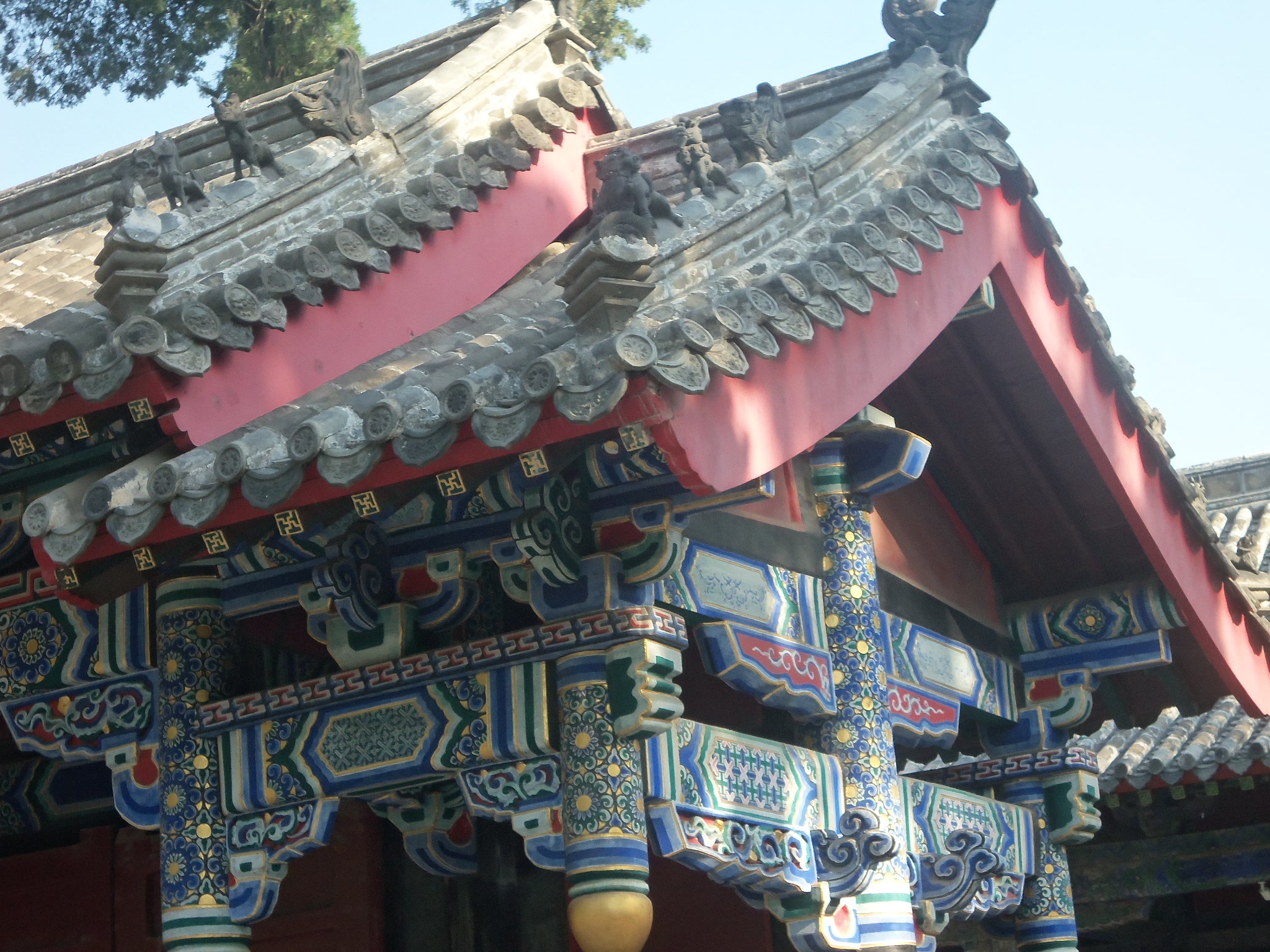
History shows that shamans and the ancient holy men and women believed the physical world was merely a reflection or mirror of the spiritual realm.  In early China, various ideas vied for prominence, with the shamanic view—emphasizing our connection to nature, the cosmos, and the I Ching—standing out as especially influential.
Taoism took the next step in addressing the question of individual fate by giving people both meaning and purpose. This was a big deal because it went against the emerging Confucian idea that the individual had little importance, with minimal attention given to the spirit.
In Confucianism, life centered on filial piety, i.e., the virtue of exhibiting love and respect for one’s parents, elders, and ancestors, and the emperor’s authority. Over time, however, the focus shifted more toward recognizing the inherent virtue in all things under heaven.
Sometimes the storyteller becomes the historian, carrying the voices that still feel the need to be heard. While Confucian influence grew dominant in Chinese history, other voices always have had stories worth telling. It’s a reminder that age doesn’t define us. We’re timeless, and our purpose grows as we move past what we think we know, heading toward the ultimate vision we dare to imagine. Without being tied to a set principle, we find ourselves driven to pursue it with the courage to keep looking past our current journey to the horizon.
From the end of the Warring States Period to the rise of the Early Han dynasty, spanning roughly 200 BC to 100 AD, this three-hundred-year era could be seen as what I would call the coalescence of spirit that would serve to shape what we would today call China and the world for more than the next two thousand years.  To what was to become known as feng shui and geomancy (shaping our environment to fit our highest endeavors), and what was to become the Perfected Man of Chuang Tzu and Everyday Man of Lieh Tzu.
To the perfected and everyday man and to what was meant to be the actual achievable goals for ordinary people. And finally, to a sense of freedom to achieve our inner most sense of identity. How people with different points of view can coalesce into a unified whole and question the true meaning of individual divinity, freedom, and purpose.
To how our spirit is to act in what we might call everyday norms.
My travels with Lieh Tzu / Interpolations along the Way
Chapter Eight – Explaining Conjunctions
148. Misplaced Affections
How can one live with resentments to die for? How can one find his own way if he is clouded by what should be considered as misplaced affections? Confusing events and reality to meet some definition of how others seen as more important than we see ourselves will find us along the way.
Governed by some real or unreal slight that can never have any real meaning. Who can make sense of it? There is a story of a man known as Chu Li‑shu, who was in the service of Duke Ao of Chu. Having toiled on the sidelines for many years he became upset that the duke took him for granted. That his ideas and actions always fell on deaf ears and blind eyes. The duke always played up to those higher than himself and to prop him up. Chu Li‑shu felt unappreciated and unwanted.
One day, Chu Li‑shu told the duke that he was tired of being forever overlooked and left to live a simple life with friends along the seashore. Eating water chestnuts and lotus seeds in the summer and chestnuts and acorns in the winter.
After a few years had passed, Chu heard that the duke was in trouble and planned to leave his friends to go fight and die for the duke. Before leaving, his friends were amazed the Chu would come to the aid of Duke Ao. When not a day had gone by since he arrived, he had expressed how the duke did not appreciate him and told him that if he went now to fight and die for him, it would make no difference whether the duke appreciated him or not.
Ah! said Chu, that is precisely the point and that is why I must go now and stated:
“I left because I felt that he did not appreciate me, and to die for him now will prove that he did not appreciate me. I shall die for him to shame the lords of future generations who do not appreciate their vassals. What future generations must know is to die for a lord who appreciates you and refuse to die for a lord who does not. Is this not walking straight in the Way or Tao”, he questioned?
Chu Li‑shu’s friends were all at a loss for words and knew what he said was true, but only up to a point. To find one’s image only as it reflects upon another, therefore finding contentment is far from the proper way. In the end, Chu Li‑shu should have known better. 8/25/95
Number one hundred forty-eight of one hundred fifty-eight entries.
Leave a Reply