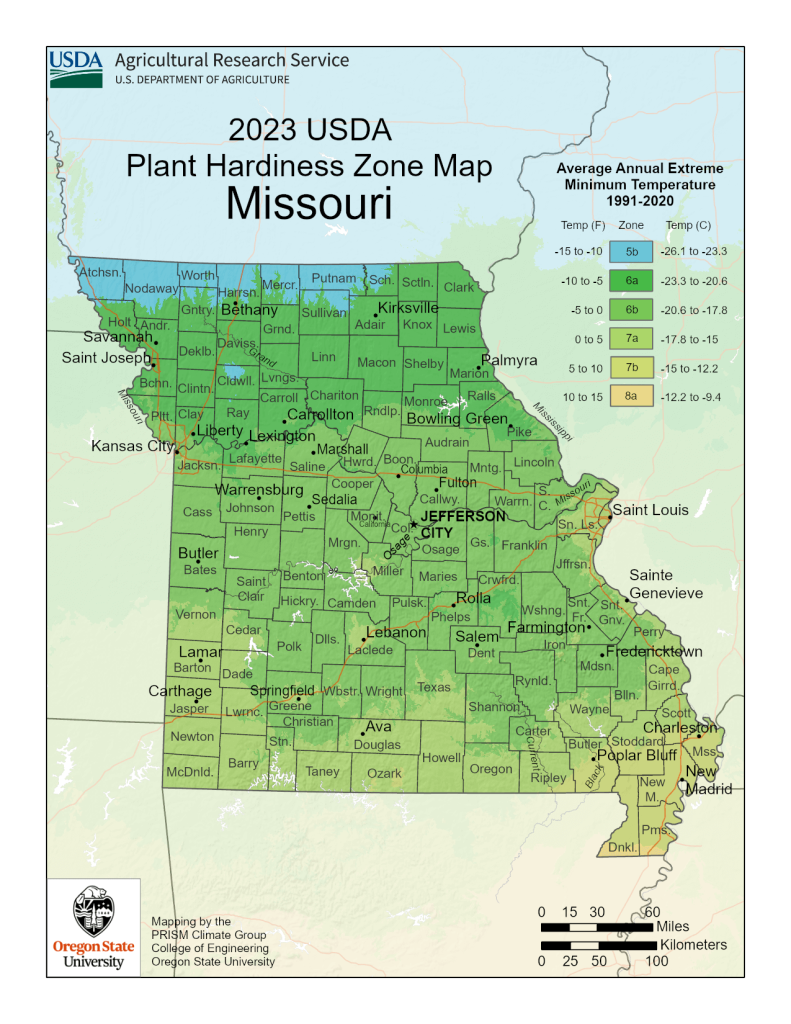
If we are starting seeds under lights as will be described later, perennials should be started first in January and February to be set out in the garden in May or June. Most perennials will not flower the first year. Emphasis should be on establishing the plant in our gardens for long-term growth and development. What we decide to plant should fit the planting zone where we live. For plants grown under lights from seed, it is important to begin going back from what is considered as the last freeze date. For myself I use April 20th. However, the weather is now so unpredictable, we need to start our plants accordingly.
Missouri is divided into four planting zones: 5b in the north, 6a and 6b in the central regions along with 7a and 7b towards the south. A small area in the southeast corner of the state enjoys the warmer growing zone of 8a. Use the map above to find your location and determine your growing zone. Springfield area is considered to be in 6b and 7a.
Most gardeners start with the USDA Plant Hardiness Zone Map. Based on the average annual winter temperatures in a region, this map gives you a good indication of what plants are likely to survive winters in certain areas.
What are the limitations of the zone map?
The USDA Plant Hardiness Zone Map is based on average temperatures. If you are growing a plant that is marginally cold hardy for your zone, a winter with below average temperatures could damage or kill a plant. Also remember microclimates exist within each zone. An unprotected area in a field is likely to experience lower temperatures than a protected area on the south side of your home. Valleys tend to get colder than hillsides.
What other factors determine plant survival and growth?
Sunlight: Some plants prefer full sun (six or more hours or sunlight daily) while others grow best in the shade (less than two hours of direct sunlight daily).
Soil types and structure: Soil can vary from region to region and even in different locations in your yard or garden. Some plants need loamy, well-drained soil while others will grow in clay and other types of soil.
Soil pH: Some plants, like blueberries, require acidic soils. Others grow happily in neutral or alkaline soil.
Summer temperatures: Some plants thrive in hot summer temperatures while others prefer cooler climates.
Water: While all plants need water, some require more than others. Drought-tolerant plants are able to go a little longer without water.
Air circulation: Some plants, like roses, need good air flow, while others don’t need as much.
Leave a Reply