I think one of the things I try to do as though I’m “living the Tao” by telling my own story. From my first encounter with Taoism and Chuang, Lieh, and Lao in December 1993 when I began writing my own version of the I Ching, there was a sense that I wasn’t “outside of it”.

My writing was autobiographical from the start. It was like they were looking for me and the found me in the Brown University bookstore in Providence, Rhode Island, where I had never been before or since. It was as though one of the books just fell off the shelf and I caught it before it hit the ground things. I opened the book and it said welcome home we’ve been waiting for you.
The importance of telling our own story is so that others can see themselves and be able to say, “Yes me too”. Our paths may be different, but our destination is the same. Staying embedded on this path is meant to merge our inner mirror with our outward actions.
Why I loved the Taoist monk One Hundred Eyes description of the meaning of Kung Fu in the Netflix series Marco Polo. Everything we do is meant to connect our inner spirit with whatever we do outside of it.
I was the Senior Planner in Fall River at the time in 1994, and the book “The elements of Taoism” said what you have been doing has to change because you can’t get where you are going from here. so, two years later I was in Boynton Beach, Florida having finished the books on the I Ching and Introduction to Taoism and was halfway through The Book of Lieh Tzu. If you’ve been following me here, we’ve completed updating the commentaries for both of them over the last year, and we are just a few pages away from completing my commentary of Lao Tzu’s Tao Te Ching now in February 2026 thirty-two years later and I’m still more than a student of Tao than a teacher.

Some things come in an instant, and somethings seem to never do because of distractions and we’re not ready to go there yet. For myself, I see me a portal and storyteller. I’m not the scholarly type (that’s Chuang Tzu’s Perfected Man), although he is a dear friend. I’m more the Lieh Tzu Everyday Man with more of the common man approach.
When I wrote my book Thoughts on becoming a Sage, the Guidebook for living a virtuous life that was my own version of Lao Tzu’s Tao Te Ching, that we’re writing the commentary for now in May/June2000, I had only been to China twice to adopt my two Chinese daughters (Katie from Maoming in 1997 and Emily in Urumqi in October 1999) where we stopped on the way in Qufu, the birthplace and home of Confucius, that would serve as the most life changing epiphany of my life.

While I lived and taught in Qufu at various times over the next almost twenty years… living and teaching next to the Confucius Mansion and Temple, Confucius was too much tied to structure and status quo, quite the opposite of my ways of thinking needing the freedom of thought and love for nature.
Taoism fit me much more than my many friends liked who wanted me to write a book about Confucius.
I liked the ideas from Confucianism that would later merge Taoism and Buddhism that come much closer to my 24/7 persona.
It was like following in the footsteps of Confucius as well as my own as if I had been here in Qufu many, many times over the centuries. So much of our journey is meant to unlock our memories of the past.
Often to make amends and mid-course corrections that we have to correct. We become who we think we are, if you have doubts then self-awareness and spirit may need some adjustment. I’m not here to argue the point only to make it for myself.
I’ve always been the type that when someone starts the conversation with saying something has to be certain way that’s less than positive – I immediately look for the opposite or last resort the middle. It’s wanting the freedom of the natural expression of all things that are involved having the final say. Working sometimes for my way or the highway people sometimes over the years led to short work spans. But finding my niche as a city planner and neighborhood specialist fit my work ethic let’s say… taking people to places where they might not otherwise go was a nice fit.
Taoism and Lao Tzu

All this how I got here from there is a prelude to the Tao Te Ching Chapter/verse seventy-three. It’s about learning to become who you were, so you know who you are meant to become.
I am blessed. My best friends from more than two thousand years ago came looking for me back in Massachusetts, found me and all they could say was where have you been all this time. We’ve had a lot of catching up to do… That’s my story and I’m sticking to it.
They then remind me what Lao Tzu says here in number 73 that “The way of Heaven is not to fight yet to be good at winning”. I always thought that was good advice. Not to fight the currents of the present, but to live the life that gets or prepares us for the next step. Retaining the wisdom, we’ve gained we now know how to use.

Also, Lao Tzu says if you are in being needlessly daring you may be killed; however, if you’re brave in not daring to act when you shouldn’t, you’ll live. In one there’s profit, in the other there’s harm.
It becomes living with intention questioning the things Heaven hates while we may not know the reason. The Way of Heaven then wins easily without a fight as we learn to answer wisely without a fight and learn to come quickly without a summons.
Plans then ingeniously carried out without a thought as the Net of Heaven become all-embracing. Its mesh is wide and may be course, but nothing escapes or slips through. We learn that spirit connected to this is our ultimate purpose and answers the question – “why would we stop here?”
What made Lao Tzu such a great teacher over the past twenty-five hundred years is because he re-enforces the power of spirit and helps to show us our ultimate role.
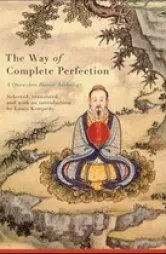
Finally, there is another book I want to introduce for those interested in learning a more comprehensive view of Taoism and the Tao Te Ching. The title of the book is “The Way of Complete Perfection- A Quanzhen Daoist Anthology” by Lewis Komjathy.
Quanzhen is one of the most important Taoist movements in Chinese history and remains the dominant form of monastic Taoism in the modern world, especially in its Longman (Lung-men; Dragon Gate) lineage. Two other major Taoist movements include the Great Peace and Celestial Masters. For myself, it serves as a benchmark for those wanting more information about both philosophical and religious Taoism.
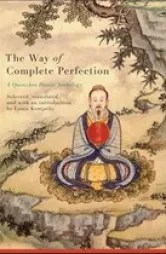
It speaks of the Tao as remaining constant through being consistent. For those interested in pursuing knowledge of Taoist past and how it impacted the history of China I highly recommend it. It serves as a great reference.
Before we go on with Verse number 73 of 85, it’s worth noting that the title of the book we’re adding commentary to—Lao Tzu’s Tao Te Ching—is my own version, titled “Thoughts on Becoming a Sage: The Guidebook to Leading a Virtuous Life”. It’s important to note that Lao Tzu wrote the Tao Te Ching in the sixth century BC, while I wrote mine in May and June of 2000 and published it in China in 2006.
Verse 73 – Staying out of the way of our own enlightenment
For the sage that is fully engaged, keeping ego at arm’s length is his reminder of how far he has yet to travel.

As he steps back for a moment to review the road map that illustrates the starting point of his journey, the road he has traveled thus far and what he hopes to learn about himself in the days ahead. Letting go and letting his friends, the dragons, lead the way.
His journey through the Tao Te Ching is now almost complete. He’s come far enough to know that keeping his virtue intact requires his simply knowing himself and remaining hidden from view as he leads the way.
Scoffing at the paradox that authority always brings to the table. That those who fear authority are usually better off than those who have authority to fear. Knowing that if there are no restrictions where people live and we don’t repress how they want to live, people won’t protest. If they don’t protest, there is nothing to fear. Thus, the sage is mindful of his role.
Careful to keep his ego in check as he knows his ultimate success will only be measured by what is left behind as he remains unattached to things outside himself.
He focuses only on his own journey letting events propel him forward to destinations as yet unknown.
His only challenge to stay out of the way of his own enlightenment.
第73节 不要自我干扰
全身投入的圣人提醒自己,与自我保持一定的距离,他要走的路还很长。

圣人退下片刻,审阅标记着他的起点和迄今为止的行走路线的旅行图,还考虑了未来几天他所希望了解自己什么。他让朋友和神龙引路。
他的道德经之旅现在快要结束了。他足以知道,保持他的大德无损需要了解自己。在指导众人的同时要隐身其后。
他笑对权威的荒谬,尽管害怕权威的人通常比让权威害怕的人活的好。要明白如果对人民的居住地不加约束,我们就不用限制人民的生活,人民就不会抗议。如果人民不抗议,就没有恐惧。因此圣人深知他的责任,小心反省自己,因为他知道自己的最高目标。
成功将由被抛弃的事物来衡量。圣人不与自己以外的人和事打交道。
圣人专心他自己的旅行,让万物把他推向未知的终点。
他唯一的挑战是不要干扰自己。
Leave a Reply