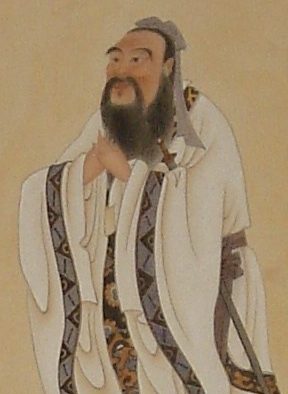
Thinking of Confucius makes me wonder how memories and philosophy merge to create solutions that stay relevant and effective even in today’s world. Especially when they are over two thousand years old. I have considered myself a student of Lieh, Chuang, and Lao Tzu, and have immersed myself in the teachings of the I Ching and Tao over the years.
When I began this chapter of My travel with Lieh Tzu. in March 1995, I had only been writing for a little over two years. My knowledge of Confucius was minimal, and I had never heard of Qufu or imagined traveling to China. At that point, I was still living in Massachusetts and wouldn’t be moving to Florida for a couple of months. Yet, here he was, filling my mind with thoughts of ancient China, urging me to follow him. To grasp how his teachings of benevolence and virtue would intertwine with what the dragons had been telling me.
Looking back thirty years later, after living and teaching at the school established by his descendants in Qufu, and now retiring in Missouri, I find myself reflecting on what it all could have meant. In my recollections through My Travels with Lieh Tzu that we are adding commentary. I have the opportunity to use the next twenty entries to explore Confucius. From my first visit to Qufu in October 1999 to what might have been my last in October 2018, I found countless ways to reflect on the past, acknowledge my connection, and understand why I felt drawn to return again and again. Living next to the Confucius Temple and Mansion allowed me to walk in his footsteps in Qufu every day.
What drew me to study Lieh Tzu was a form of Taoism that emphasized cultivating virtue, health, quietude, and living a simple, harmonious life. Inspired by the teachings of Lieh Tzu, the natural next step was to explore the philosophy of Confucius, who saw himself as a Taoist first. Benevolence and virtue begin first with a love of nature found in all things. The enduring teachings of Confucius were to teach us how we were to live.
I was to move beyond the role of a historian, where personal opinion holds no influence. Historians capture what they witness, but my aim is to refine and adapt ancient philosophies, taking on a role beyond mere documentation. Writing personal thoughts creates a journal, not simply a historical account. My role is to amplify the voices of the ancients, guided purely by virtue, as if they were refining their own ideas and words through my work. That I was to one day go to Qufu and spend several years living, studying, and teaching became a vital part of my personal transformation. Something was needed to jog my memories in a big way.
That I was not so much to at first verbalize or write about being in Qufu, but to learn how to walk again in the footsteps I had traveled before. To know that my only ultimate task is to remember and then to keep writing. That is all – just to keep writing. Confucius was to be more than simply learning about his hometown and his life, but to learn how to live with dragons once again.
Something about Qufu stuck with me after my first visit in 1999, as if history itself was urging me to return something. The weight of responsibility isn’t always easy, especially when history calls on you to remember, reflect on your past, and embrace spirit, endeavor, and destiny.
My travels with Lieh Tzu / Interpolations along the Way
50. Chapter Four – Confucius
51. Introduction… Finding Confucius
Just who is this man known as Confucius and what of his obsession with knowledge? Can he equal the things brought forth by Chuang Tzu who can see through all to its original origin?

While Confucius may help guide those responsible for maintaining the overall scheme of things in their dealings with others, can he know the true underpinnings of all there is to know that lead to logical conclusions?
Can thoughts and ideas expressed outside the true essence of the Tao have any real significance? Looking for differences to trap unseemly paradox and analogies that can confuse those not serious about finding and true way of virtue.
Who can be true to his own thoughts? Swaying this way and that by the Confucian suspicion of speculation without practical or moral relevance or by the comfort found in the seeming irrationality of the Tao.
The three tenants of higher consciousness, Buddhism, Confucius, and Taoism always present. Ultimately pushing everything to higher ground. Moving all to places they would not otherwise go.

Just as the seasoned traveler who breaks the mountain’s ridge to see the vast panorama spread before him. Every direction simply leads to destinations previously seen and known but forgotten.
A peak on Yellow Mountain where dragons have by tradition been known to fly.
Everything crystalizing over time. Can one move forward knowing the paradox found in all things that are allowed to advance in their own way? Knowing that Confucius is forever weighing benefit and harm and distinguishing between right and wrong.
Can there be a moral relevance to all things considered practical as found in the analytical comfort of knowing the results lie in the search for truth and knowledge? Can one following such a course of action be taken seriously? Who can know? Is not the ultimate to be born a Taoist, to live as a Confucian and die a Buddhist? Where can all this lead? Who can say? 3/5/95
Number fifty-one of one hundred fifty-eight entries.
Leave a Reply