Taoism and Lao Tzu

Taoism didn’t just spring up overnight—it developed over thousands of years into what it is today. Every person sets out on their own inner journey, striving to reach their full potential. Taking inspiration from Lao Tzu, one of history’s greatest teachers, can be a rewarding way to learn how to spend our time.
My writing isn’t just an academic journey with fixed boundaries, but one of heart, mind, and spirit. I want my love for my eternal companions, who guide and show the way, to be clear. There’s no right or wrong way to decide how eternity will judge us as we each have our own journey to follow—only how we take in the lessons we’ve learned and cherish the memories that have stayed with us over space and time as we go forward.
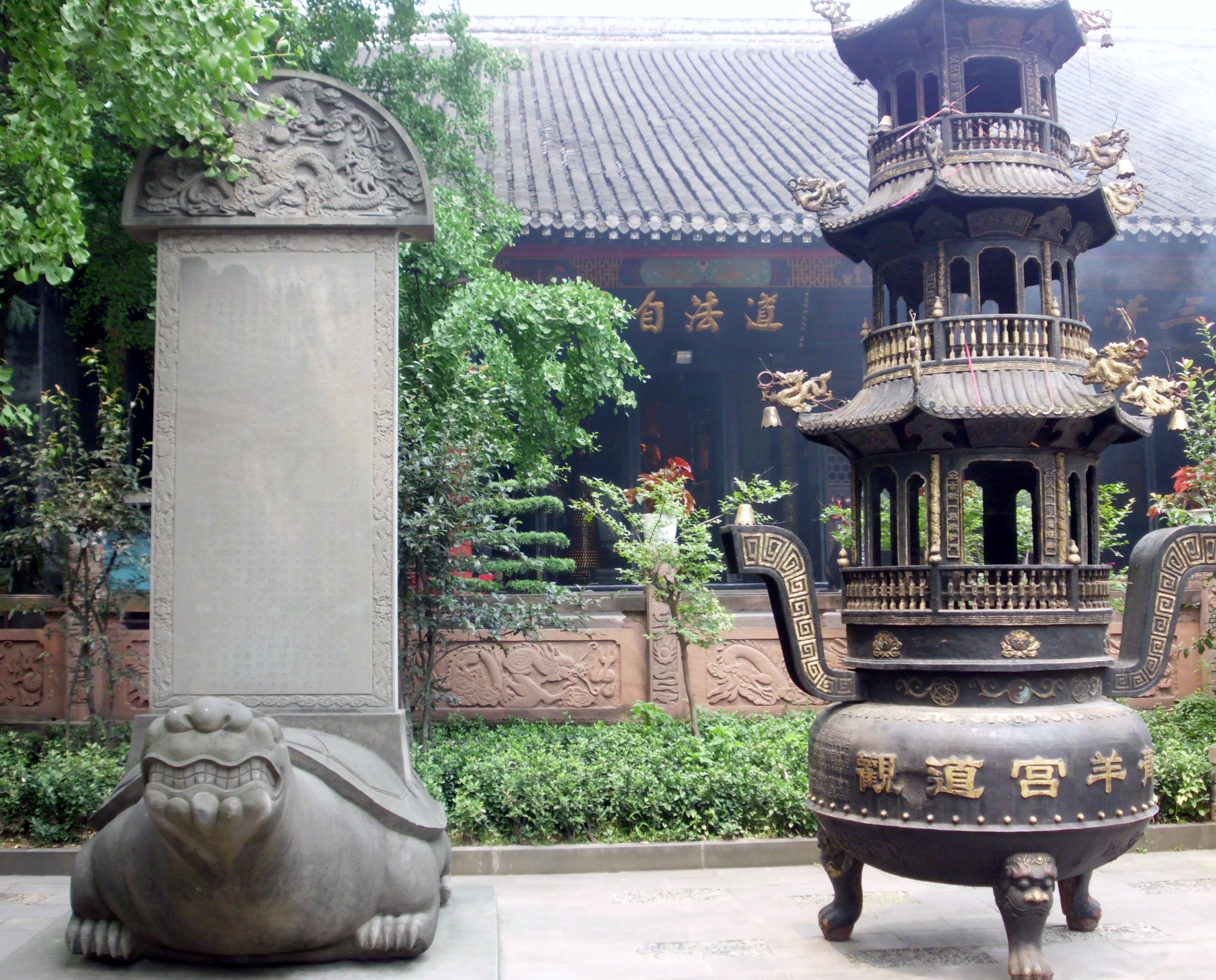
Dan’s Notes: The narrative on my website, originally published in both English and Chinese in China in 2006, will now be updated with only the English portion along with any new contributions I make.  The photos featured here were all taken by the author during travels across China over the years, primarily at historic sites connected to Taoist history, religion, and culture.
Qingyang Mountain, along with the nearby Dujian Waterworks, Qingyang Taoist Temple, and Wuhan Temple in Qingdao, along with many others, offer a rich cultural and scenic experience. Additional photos from across China are added to better convey the story.
Thoughts on becoming a Sage – the Guidebook to leading a virtuous Life
Preface
This book represents a personal commitment to gaining a further understanding as to how Lao Tzu and his Tao Te Ching fits into the modern sense of what it means to be seen or considered as a sage. The traditional meaning of the sage has had a special meaning and connotation reserved for one of great insight and learning throughout Chinese history.
Usually attributed to the great Taoists teachers Lao Tzu, Chuang Tzu and Confucius, the term generally refers to one of great learning and insight who becomes a teacher of valuable lessons as to the way people should conduct their lives.
Thoughts on becoming a Sage represents the author’s interpretation of the Tao Te Ching in a personalized style that illustrates the way of virtue and steps one would take in seeking out those attributes most resembling a “sage like” lifestyle and ways to live in the secular world.

The paradox being that one cannot see oneself as a sage in the here and now… This would be seen as presumptuous. One simply aspires to see beyond himself and whatever his shortcomings may be and in doing so he can catch glimpses of his highest endeavor and destiny.
Just as there is an underlying or unity of philosophical religious teachings throughout the world, as shown by the teachings of Jesus of Nazareth, Mohammed of Medina, Buddha, Lao Tzu, Mencius, Confucius, and others, one who emulates or strives to live a life of virtue sees past self-imposed religious differences and intolerance found in the world around him.
They see the likeness in everyday activities where virtue, or man’s highest endeavors, are reflected and accepted as universal truths, i.e., that we are all God’s children. It is when one reflects on his or her place in the scheme of things reaching an understanding of where they fit into this unity found in nature that the journey begins for real.
In a previously published book about the I Ching, An American Journey through the I Ching and Beyond, the author began this series about early Chinese history and philosophy in an effort to bridge seeming differences that are in reality non-existent.
In Chinese history, there was a figure from the sixth century during the Tang Dynasty who embodied a shared spirit of wisdom and unity. Li Fang believed Confucian teachings could harmonize with Taoism, Lao Tzu’s philosophy, and the Laoshan Buddhism that was widespread at the time.
He held that all religions shared a core belief in a singular God, each serving as a path to the same destination, with no one path superior to another.
For him, it was about following one’s natural inclination to build a personal connection with God, later understood as the Dao or Tao. That we are meant to see ourselves as universal and that we are always to be seen as though we are refreshing and reframing conscience thought through our actions in the present.
To begin to understand Lao Tzu’s Tao Te Ching, you must first begin by understanding what he meant by the Dao or Tao, or what is commonly referred to as the way or path one should follow throughout one’s life.  The way defines one’s path to ultimate reality, for me, it has been a lifelong journey of self-awareness that is never-ending.
Although Lao Tzu continually throughout the Tao Te Ching re-affirms, he does not know it’s true name, without a name it simply becomes the way, or better known as the “way of virtue”. Albeit serving to find one’s ultimate path. The connection between the sage and dragon was and continues to be the reflection of man’s highest endeavor and ultimate destiny.
Ultimate reality is about discovering a shared sense of one’s place in the physical universe, often described as heaven and earth, and recognizing a connection to all things within it, commonly referred to as the ten thousand things. Much of my work here is simply serving as an editor to make this “Way of Virtue” easier to understand and more accessible to a wider audience.
Our earlier journey through Lieh Tzu’s “Book of Lieh Tzu”, along with my own version, “My Travels with Lieh Tzu”, took nearly eight months to cover 158 entries. Lao Tzu’s “Tao Te Ching” has only 81 entries, so it might not take as long, even with added commentary. It really depends on what he and others choose to contribute now, 25 years after the original version was written.
Leave a Reply