To appreciate and understand ancient Chinese philosophy and attempt to bring it up to date with modern everyday popular culture, you must proceed as though few really care in your everyday surroundings except you. You find yourself writing as though the wisdom of the ages seems lost. With hopes of being published tied to your writing, nature, and bliss of your own making. We learn from history, as we embrace the spiritual growth that extends to universal truths and virtue. This has been the central teachings of all Indigenous populations, not just in China. Eastern thought and philosophy have always focused on becoming one with the natural order of things. The I Ching, Taoism, Buddhism, and Confucianism, have always set the benchmark or roadmap to follow.
The roadmap begins with the I Ching and learning to appreciate complimentary opposites. When myths and legends of the ages come together with wisdom from a source who has lived through the times, universal vibrations can best be taught as a metaphor. This symbol or personification is often used to convey, or more importantly, to take others to place they might not otherwise go. It is not enough to tell the story. The story tells much better with a participant. Someone who was there at the time. Storytelling through the ages has always combined both fact and fiction. But who is to say what may be factual verses a vivid imagination.
We all have guides we look to. Mentors who are here to show us the way. It remains what comes forth as spirit that we decide to listen to when our inner virtue beckons us. There is no one way to connect back to the universe that serves as our ultimate teacher. We become first a student then teach. Once we become accustomed to the path we are to travel our role reverses, we become the teacher as those around us becomes the student.
For me, it is first returning the nature I came in with best exemplified by what is known or called Taoism. Stepping into the role we are here to play begins first as an instant followed by years of finetuning. There is no one size fits all. Becoming one with the natural order of things is essential and learning that there is no self… only virtue and remains universal to all things.
Inner Chapters (The I Ching)
Number 1 of the I Ching
- Cloud Dancing
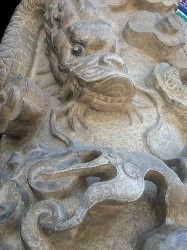
From the clouds dragons appear to those who have prepared. To the I Ching, heaven is to be found residing with dwellings of dragons who roam the sky resting in the clouds.
Do not look for me where you have found me before. You will not see me where you have seen me before. Dancing in the clouds with the immortals is where I am to be found.
To be seen with dragons. Cavorting above it all. Beyond earthly endeavors. A strong personality who with compassion and caring succeeds by seeing his destiny in the clouds.
Finding the Tao, finding oneness and finding myself floating across the ski with chi. Cloud Dancing across the sky is easy living with dragons is not. A group of dragons are seen riding the clouds disappearing through the sky. As we disappear, I look back and see dragons resting on clouds dwelling in the sky.
An original composition and interpretation of the Chinese Classic the I Ching (1 HEAVEN / Heaven over Heaven). 2/3/94
The dragon. The ultimate connection to heaven on earth that we can look to and aspire. The dragon, often depicted as the sage. Not to be taken lightly. Becoming one with dragons going forward was essential to my own story that was to follow with everything told as though autobiographical… This was to become the telling of my own story. To live your life as a sage is the ultimate bliss on earth. Not as what may be called a hobby and an advocation, but to live as the vocation expression who I have always been. Over the years to come, the dragons would appear as mentors. Chuang, Lieh, and Lao Tzu, would serve as my guides.
Leave a Reply