The way we express the duality of our daily lives shapes and can determine our fate. What exactly is fate, and does it have a definitive end? When we die, is that the end or is it like a door as our spirit continues as cosmic dust waiting to be renewed into something else? This is how I try to understand the true meaning of fate. Is it our own internal decisions that define us, or are we shaped by events beyond our control that ultimately determine our fate? 
We often hear that when someone dies, they reunite with family members who passed before them. But why stop there? Why do we place such limits on eternity and the role we play in the eternal here now to grow beyond who we are in the present as the continuation of spirit.
Chuang Tzu was well-known for laughing at those who insisted that life ends completely with death, expressing the idea that fate is a guiding principle or cause determining how things come to be or events unfold. Ultimately, it is how we live everyday through our memories, thoughts, and actions that determine our destiny. It is often believed that events, particularly final or negative ones like death or defeat, ultimately determine a person’s fate.
While we want to decide our own fate in that we are a continuation of never-ending spirit here to grow and expand into the true meaning of the eternal. Pre-destination seen as one day returning to the stars as spirit and that there is no separation between us and our eventual destiny. Here now only to refine the role we are here to play.
Fate can be seen as a force that some believe dictates and controls all events, leaving no room to change or influence what will happen.  It refers to the occurrences in a person’s life, especially unfortunate ones that bring an end to their existence or a specific chapter.
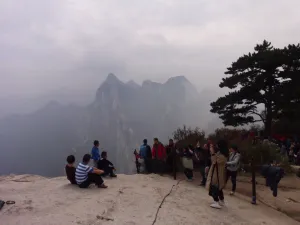
Perhaps awakening in the midstream of life to see ourselves having that mountain top or aha experience that connects us to the eternal. Do our spirits embody the essence of free will, or are we inevitably bound by a predetermined fate no matter what we do? These ideas are explored thoroughly as My travels with Lieh Tzu below and becomes how we see ourselves as the continuation of spirit.
Is out spirit eternal and if so, it becomes an “if-then”. Chuang Tzu above asking are we preparing for what may be seen as the long run and that there is no separation or need for duality. Why can’t we expand our horizons to say we are only here temporarily and returning home, to the stars above and the eternal. The connection is expressed as Taoism in that heaven is right here in the way we live every day. As the Christian mystic Catherine of Siena said earlier that “all the way to heaven is heaven”.
My travels with Lieh Tzu / Interpolations along the Way
Chapter Eight – Explaining Conjunctions
116. Who really Cares, who’s willing to Try
Who can know the proper way? Who really cares, who is willing to try? Who will set the example of the right or wrong way to live or to die? What kind of example do we set for others as we find ourselves making the best or worst of each day? How can we seek to capture those who choose to rob others, instead of seeking a worthy livelihood for themselves?  Does Lieh Tzu not tell us in the story that follows?
There was a certain man named Hsi Yung who could read another man’s face and recognize him as a robber by scrutinizing the space between his eyebrows and eyelashes. The Marquis of Chin sent him to identify robbers throughout the countryside. His talent was so good that he did not miss one in a thousand.
The Marquis was delighted and told his friend Wen‑tzu. He explained to Wen‑tzu that by discovering this one man he had brought an end to robbery throughout the country. Why should he need anyone else? An end to his problem was in sight.
Wen‑tzu stated: “My Lord will never get rid of robbers if he relies on an inspector to catch them. I would certainly add that your man, Hsi Yung, will not die a natural death.”
On that very day, a few miles away the robber bands were plotting together, saying:
“The man who has brought us to this situation is Hsi Yung. We must join forces, wait for the right time and kill Hsi Yung.” 
The bandits soon afterwards found their chance and killed Hsi Yung. Upon hearing of Hsi Yung’s premature death, the Marquis called upon Wen‑tzu who reminded him of an old proverb of Chou which went:
“Scrutiny which reveals the fish in a pool is unlucky. The wisdom which guesses secrets is fatal.”
Wen‑tzu went on to say that His Yung came too close to the source and was therefore extinguished and continued:
“If you wish to be done with robbers, your best course is to appoint worthy men to office and let them enlighten those below them. If the people have a sense of shame, why should they become robbers?”
The Marquis followed his advice and the robbers soon fled. 8/12/95
Number one hundred thirty-three of one hundred fifty-nine entries.
Leave a Reply