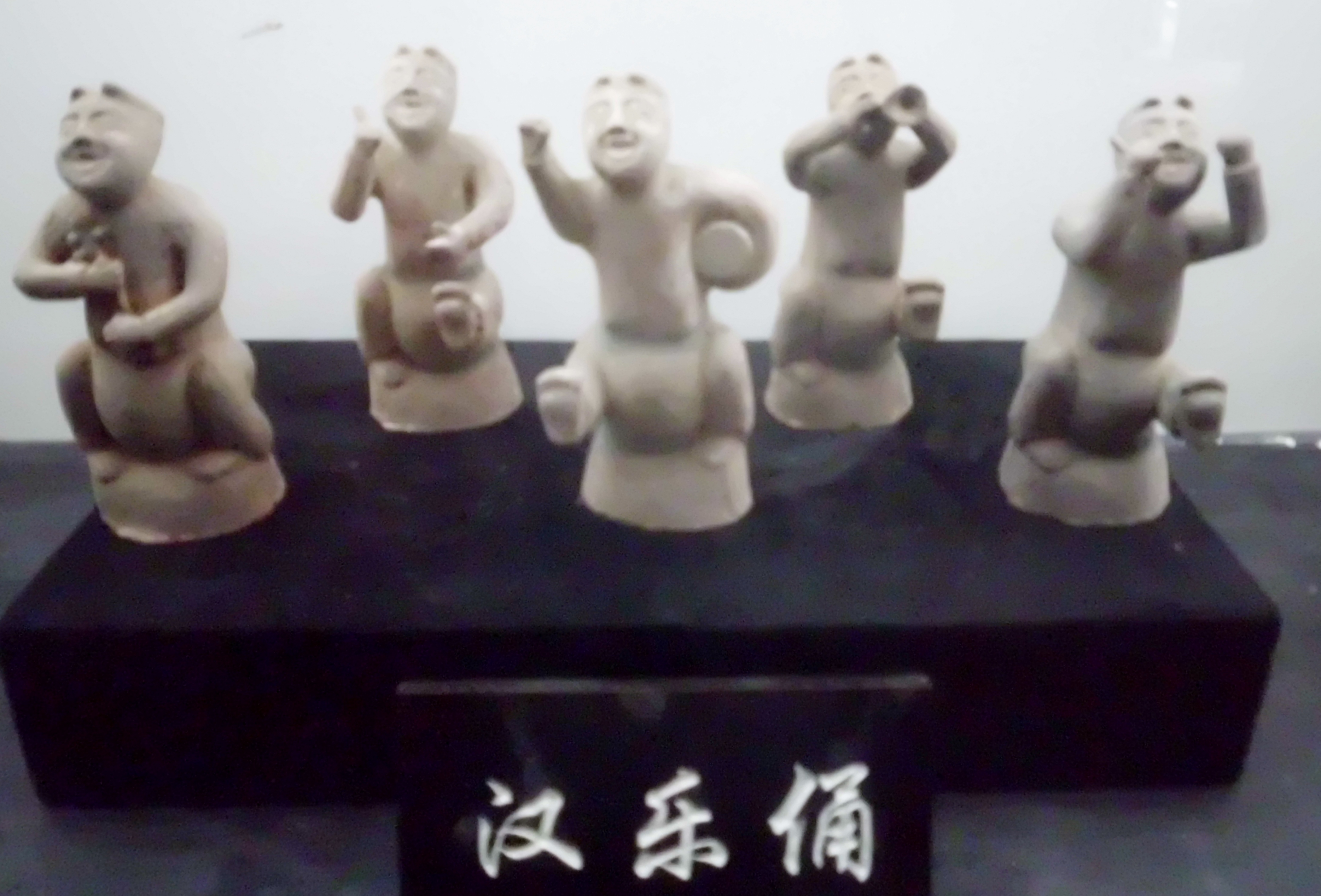
In the early stillness of the day, let your breath slow and your thoughts soften. Sit with the image of five small clay musicians from the Han Dynasty — humble figures, unadorned, kneeling in silence, yet carrying a teaching that reaches across two thousand years. Let them guide your meditation this morning.

These figurines show humanity in its most universal form. They carry no markers of status, no distinctions of gender, race, or class. They are simply human beings shaped from earth, expressing joy through music. In their simplicity, they remind you that at the deepest level, we are all the same. We begin the same. We end the same. We return the same. The three characters beneath them — 汉乐俑, Hàn Yuè Yǒng — tell you plainly what they are: Han Dynasty Music Figurines. But what they represent is far greater than their name. They are a reminder that beneath all outward differences, the human heart is one.
Music is the oldest universal language. It crosses borders, cultures, eras, and identities. These figurines show singers, drummers, performers, companions — a small chorus of humanity. They remind you that human expression is collective, not individual. Every person is a piece of the continent, a part of the main. As you breathe, let yourself feel that you are part of a shared story, a shared lineage, a shared humanity. No one stands alone. No one sings alone. No one returns alone.
In the Han worldview, music accompanied the dead into the afterlife. These figurines were placed in tombs so the departed would be welcomed with harmony, accompanied with joy, carried forward by song. Let this truth settle gently in your heart: if we have lived the life we were meant to live, we will leave this world singing, with the tolling of bells for a life well‑lived. The figurines are that song — a reminder that departure can be joyful, that return can be peaceful, that the door at the end of the corridor opens into something familiar.
Their gestures are expressive — leaning forward, hands raised, mouths open. They perform together. Not one alone. Not one isolated. Not one island. They embody the truth that whatever affects one of us affects us all. When one voice is silenced, the whole chorus is diminished. When one person suffers, the whole lineage feels it. As you breathe this morning, let compassion rise. Let your heart widen. Let yourself feel the quiet responsibility we share for one another.
These figures are two thousand years old, yet they look like us. They feel like us. They express what we express. They remind you that humanity has always been one body, one breath, one song. The continuity of the human spirit stretches across centuries, across cultures, across lives. As you sit in the morning light, let yourself feel that you are part of that continuity — part of the universal song that has never stopped playing.
Take one final breath and let this truth settle:
You are part of the universal chorus. You are not outside your own lineage. You walk the corridor. You approach the door. And when the time comes, you will return singing — because the bell that tolls for one tolls for all.
Carry this into your morning.
Leave a Reply